 Will you stop, Dave? Stop, Dave. I’m afraid. – HAL 9000
Finish each day and be done with it. You have done what you could do. Some blunders and absurdities no doubt crept in; forget them as soon as you can. Tomorrow is a new day. You shall begin it serenely and with too high a spirit to be encumbered with your old nonsense. – Ralph Waldo Emerson
The refusal of praise is a desire to be praised twice. — La Rochefoucauld
The water a cow laps turns into milk; the water a snake licks changes into poison. — Zen saying
The most dangerous form of transportation, by passenger-mile, is the bed. — #micronations
I knew that if I lived long enough, something like this would happen. — George Bernard Shaw’s epitaph
What are the marks of a sick culture? It is a bad sign when the people of a country stop identifying themselves with the country and start identifying with a group. A racial group. Or a religion. Or a language. Anything, as long as it isn’t the whole population. — Robert A. Heinlein
A college student once asked the Lubavitcher Rebbe what is his job. The Rebbe gestured to the ceiling of his room and replied: “Do you see that light bulb? It is connected by wires to a power plant that powers the whole of Brooklyn. And that plant is connected to turbo-generators at Niagara Falls that power the whole of New York State and more. Every one of us is a light bulb wired in to an infinitely powerful generator. But the room may still be dark, because the connection has yet to be made. The job of a rebbe is to take your hand in the dark room and help it find the switch.”
I like the word `indolence.’ it makes my laziness seem classy. — Bern Williams
Stealing is not excusable if, for instance, you are in a museum and you decide that a certain painting would look better in your house, and you simply grab the painting and take it there. But if you were very, very hungry, and you had no way of obtaining money, it might be excusable to grab the painting, take it to your house, and eat it. — Lemony Snicket
 (Note: your care mutual fund is likely to suffer critical shortfalls of care. Written for a specific audience).
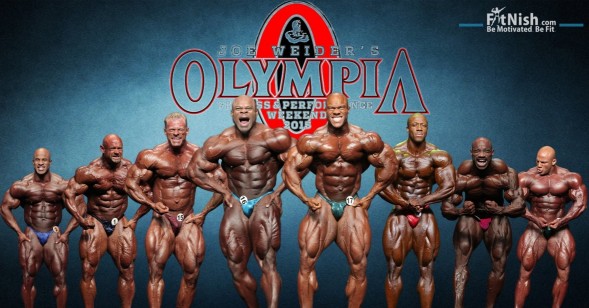
The world’s biggest bodybuilding show has come and gone, and like always, the Mr Olympia contest seems curiously next to the controversy and drama. Two quick rules: a) everything in bodybuilding sucks except the bodybuilders, and b) complaining about sports is more fun than following sports. There were events in 2015 that we’ll be chewing over for a long time.
Phil Heath won a fairly uncontroversial victory. Shawn Rhoden was the only one who seemed to be pushing him, but when they turned around, it was all over from the back. Phil’s thickness and fullness just stole the show, and his structural issues (narrow clavicles etc) don’t seem to be holding him back at all. I noticed that one judge had him in second place in the prejudging. By the night show, all five had him in first.
The biggest story was Phil’s missing arch-rival: where is Kai Greene? Over the past few weeks he’s ended a long-lived contract with Musclemeds, launched his own company, failed to sign the contract for the contest, lost his chance at a near-guaranteed second place finish, and has released a nine minute video literally crying about it< all/a>. If you hear people saying he was “banned” from the contest, piss on them. He has not been banned. He did not sign the contract, and that’s the only reason he was not at the Olympia this year. Here’s IFBB promoter Robin Chang’s account of Kai Greene’s failure to put a signature on a piece of paper. Frankly, nothing about this story makes any sense, and although I have some theories I think we need more to go on.
Kai’s non-appearance left the door open for someone else to move up to number 2, and that someone else proved to be…Dexter Jackson. As a rule, he looks better in videos than photos. I don’t think anybody predicted this – Dexter is 46 and seemed to be a permanent fixture in the 4th-6th spot. I don’t know about this decision: his condition and proportions are great, but he’s fundamentally a pretty small guy in the lineup. Dexter is great…but top 2 great? My opinion vacillates.
Otherwise there’s just little storylines popping up and resolving themselves. Big Ramy was being touted as the heaviest bodybuilder ever to set foot on the Olympia stage…DIDN’T FUCKING HELP, DID IT? Enjoy your fifth place, you waterlogged Egyptian. I say this with the expectation that he will be a top-level threat once he figures out how to diet properly. The guy’s just overwhelmingly massive, and not necessarily in a good way. The cuts and details you want to see just aren’t there.
The big positive surprises of the show were Will Bonac and Dallas McCarver (who is just 24 years old). A lot of fullness and pop in both of them, and plenty of potential to shunt their way up the ranks. I’m concerned that Bonac keeps getting lost in the lineup – on his own, he’s pretty much flawless. Dennis Wolf and Branch Warren did their usual “ugly as fuck but still tough to beat” acts. Roelly Winklaar could have placed higher – he’s another one who keeps getting overlooked. Steve Kuclo had no business stepping on stage that weekend – does he even diet for shows these days?
In any case, the circus is over, and now these depleted athletes can partake in some bread.
 Twilight creator Stephanie Meyer has a gift for characterization. On first (and second, and third) reading, you might think the gift is defective, coated in Anthrax, made by slave labour in Shenzhen, China, and should be returned posthaste to the dollar store where she bought it.
But it’s true, she does write good characters…if you view characterization from a certain perspective. Complaining about Bella Swan being a bad character is like complaining about Georgi Markov’s ricin-tipped umbrella because it doesn’t keep you dry in the rain.
Bella’s supposed to have no motivations, no will, and no identifying details. This is intentional, because young girls are supposed to imagine that they are her. She’s a blank shape moving through the text with “YOUR FACE HERE” written on it. You’re supposed to close their eyes and imagine you’re Bella, being romanced by a handsome jerk. They say that cricket appeals to people because everyone thinks they’re good at it. Twilight seems like cricket – it packages a fantasy in a way that makes it seem like it could happen to you.
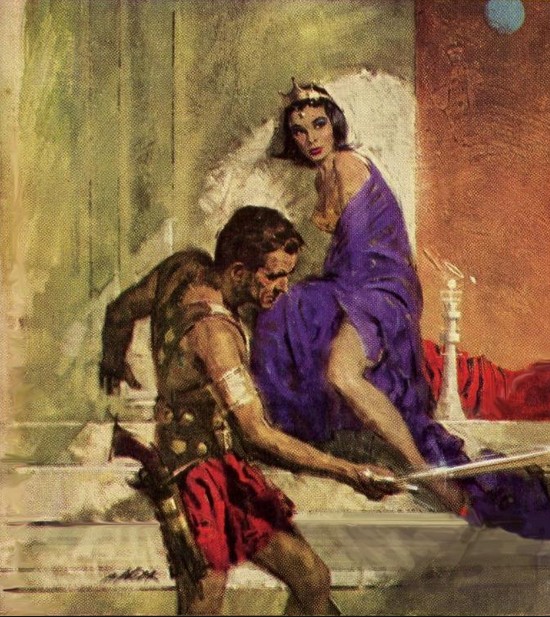
There are male equivalents. Ninety years before Twilight, there was a book called A Princess of Mars, where a man from our world is transported to Mars, and more or less becomes king of it, winning the heart of a beautiful woman. But Edgar Rice Burroughs made a mistake in John Carter’s characterisation – he was too tough. Tall, handsome, a soldier from the Civil War, he lacked that everyman quality. Maybe that was less of a problem in 1912, when you still met everymen who were like that, but still.
Ripoff books soon appeared that corrected this flaw. John Norman’s infamous Gor series eventually pupated into a diary of Norman’s unashamed and aberrent sexual fantasies, but the first book (Tarnsman of Gor) was a retread of A Princess of Mars with the intimidating alpha male hero changed into an unassuming college professor. That’s doing it right. To appeal to science fiction fans, you really want a nerd hero, not someone who resembles the jocks who bully them on the football field.
It creates realism problems: it doesn’t seem plausible that John Norman’s hero could so quickly pick up Bruce Lee-esque fighting abilities (at one point, defeating a dozen armed men with his hands literally tied behind his back). But that’s not the point. The hero has to code as a nerd. It doesn’t matter whether he actually does anything nerdy. It’s like The Social Network Movie – where Mark Zuckerberg effortlessly owns every conversation he’s in, has the eerie confidence of a cult leader, but he knows a lot about programming so I guess he’s a nerd.
In any case, “nerd becomes king of fantasyland” was the number one cliche of fantasy books for several decades (wielding several ancillary cliches such as “the first alien lifeform encountered on the planet is an attractive humanoid female”). It started to become annoying, because usually the author tried to both have his cake and eat it, by making their nerd suddenly a cool ass-kicking hero when the story required it.
This approach has metastasized into the world of videogames (where blank cipher Gordon Freeman is a dorky scientist who obviously can outfight teams of Black Ops specialists), as well as Hollywood movies (where the hottest girl in high school can’t get a date because she’s quirky and has a random sense of humor, or whatever).
Artists try to have it both ways, and we get characters that aren’t just fake but contradictory in a self-annihilatory fashion, like matter and antimatter mixed in a flask. Books, movies, etc are full of fat characters who wear size zero jeans, master generals who make utterly retarded decisions for the sake of author’s convenience, etc. In books, the labels always lie.