 “No one has ever written, painted, sculpted, modeled, built, or invented except literally to get out of hell.” – Antonin Artaud
“You are not the king of your brain. You are the creepy guy standing next to the king going “a most judicious choice, sire”.” – Stephen Kaas
“I could not take lightly the idea that people made love without me.” – Jean Genet
“That’s the problem with drinking, I thought, as I poured myself a drink. If something bad happens you drink in an attempt to forget; if something good happens you drink in order to celebrate; and if nothing happens you drink to make something happen.” – Charles Bukowski
“To increase desires to an unbearable level whilst making the fulfillment of them more and more inaccessible: this was the single principle upon which Western society was based.” – Michel Houellebecq
“I would like to write a Book which would drive men mad, which would be like an open door leading them where they would never have consented to go, in short, a door that opens onto reality.” – Antonin Artaud
“A woman should soften but not weaken a man.” ? Sigmund Freud
“Do not, do not, do not books for ever hammer at people like perpetual bells? When, between two books, silent sky appears: be glad” – Rainer Maria Rilke
[on theater] “The actor is both an element of first importance, since it is upon the effectiveness of his work that the success of the spectacle depends, and a kind of passive and neutral element, since he is rigorously denied all personal initiative.” – Antonin Artaud
“Blessed are the hearts that can bend; they shall never be broken.” – Albert Camus
“Far from being the smartest possible biological species, we are probably better thought of as the stupidest possible biological species capable of starting a technological civilization – a niche we filled because we got there first, not because we are in any sense optimally adapted to it.” – Nick Bostrom
“Life is such unutterable hell, solely because it is sometimes beautiful. If we could only be miserable all the time, if there could be no such things as love or beauty or faith or hope, if I could be absolutely certain that my love would never be returned: how much more simple life would be. One could plod through the Siberian salt mines of existence without being bothered about happiness. Unfortunately the happiness is there. There is always the chance (about eight hundred and fifty to one) that another heart will come to mine. I can’t help hoping, and keeping faith, and loving beauty. Quite frequently I am not so miserable as it would be wise to be.” – T.H. White
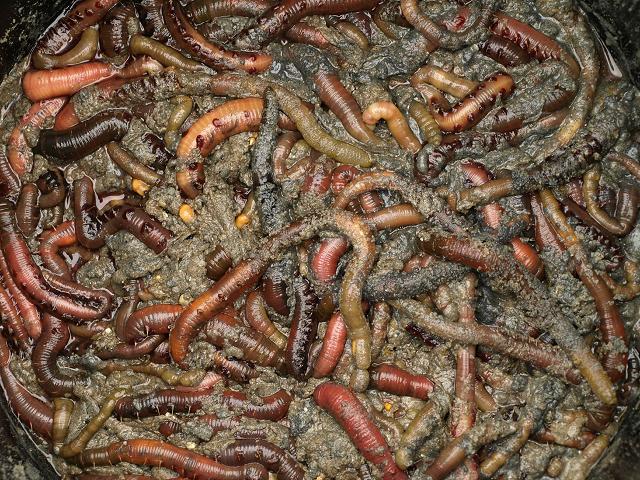 He started a worm farm.
Worms ate household waste. Worm castings made good fertiliser. But these were insignificant reasons, small change in his pocket. He did not need a worm farm.
He bought a plastic worm box, and assembled it in the shade of his veranda. The box had four levels, the first three for varying strata of soil, and the final level for liquid released by the worms. There was a tap, so he could drain out the effluent from the worm castings.
He filled up the box with dirt, shredded paper, powdered eggshells, and water. Then he got out a plastic bag filled with red wrigglers. It seemed to pulse with life, like a beating heart. He upended the bag over the bedding, watching a thousand worms sprawl and tumble out. Then, he covered the worms with more kitchen scraps and more dirt.
He dusted off his hands and put the lid back on. He was suzerain of a thousand little lives.
The phone rang, and he went inside and answered it.
***
Three days later, he lifted the lid on the worm farm, and his nostrils flared at the smell – a heady organic stench, paradoxically dirty and clean.
He looked down at the mix of shredded newspaper, coffee grains and potato peelings.
Where were the worms?
Thirty seconds later, he still couldn’t see any movement. He must have done something wrong. His worms were dead.
Then, he noticed the end of a gelatinous tail slip into the vermicompost.
It was as if this set off a reaction across the worm farm. Suddenly he could see lots of movement, lots of twitching segmented bodies. There were worms everywhere – why hadn’t he seen them?
Maybe the human brain codes worms as unimportant, and his eyes just filtered them out.
He sat for a long period of time, watching the worms – seeing the invisible, exalting the tiny, worshipping the small. But were they truly small?
He thought of Einstein, and of relativity, and how one reference point is as valid as any other reference point. From a man’s perspective, a worm is small. But there are other perspectives – an infinity of them. And they are all equal.
Staring down into the farm filled with lives little yet big, he rubbed a patch of skin on his ring finger.
***
His house was lonely. There was so much empty space now that the furniture was removed.
He spent long hours outdoors, with the worm farm.
He tried not to keep the lid off for too many hours – the worms would dehydrate. He collected the worm castings and used them to fertilise his garden. Sometimes it rained, and he dragged the worm farm into the downpour. He wondered if worms understood rain.
He found the worms themselves fascinating. He’d started off with a thousand, and knew that soon there would be far more – he’d read about the little cocoons, with still more pink tubes of meat spewing out in a cycle that would encompass hundreds of generations.
One day, he saw a wriggler leave the soil until it’s entire body was exposed. He realised something – they were beautiful.
A smooth shiny body, unmarred by Paleozoic disasters like limbs or a face, sensual and voluptuous. One section of it shrank, another section expanded, the worm pushing itself along with pulses of contractile fibre. Was any animal as thrilling when it moved?
He reached down, and picked up the worm between his thumb and index finger. The little thing was about six centimetres long. Caught in his grip, it twisted and contorted itself into all sorts of shapes – helices and curlicues and loops of almost iridescent ochre. He smiled as it accidentally touched its head to its tail, like the Ouroborus.
Such a small thing between his fingers. But at the same time, colossal, unimaginably huge, a destroyer of words.
A man is bigger than a worm. But there is nothing intrinsically big about a man, and nothing intrinsically small about a worm.
He imagined himself as a being one micrometer tall, standing astride a single grain of dirt, watching as a worm burst from the ground.
A gargantuan red serpent, segment upon segment upon segment, thrusting itself skyward, blindly seeking heaven.
He imagined himself watching it thrash and flail, an incredible limbless god. Watching its mouth open and shut, columns of scintillating teeth gnashing.
He turned the worm over and over in his fingers. It twisted and turned at both ends, like an glistening parabola of flesh.
He brought it up to his face, and understood the true reason he had gotten a worm farm.
 A simple diagnostic to work out whether you’re famous: has your home scene disowned you yet?
The Mona Lisa is the most famous painting in the world. Yet I’m told that nobody in art circles pays it any attention. It’s not a case that the painting is oversaturated and nobody wants to talk about it. The Mona Lisa genuinely doesn’t seem to be of interest to people who study art for a living.
It was involved in a famous art theft, and maybe it hung in Napoleon’s bedroom for a while. These things ignited a self-sustaining fire of parody and cultural reference that keeps laypeople interested to this day. On its own merits, its a well-executed portrait from an era of well executed portraits. Okay, but not greatest-painting-ever material. Or such is my reading of the art community’s attitude.
In the same way, a top 10 list of thrash metal might conceivably never mention Metallica, and a 10 top list of house music would probably never talk about Daft Punk, and UK skiffle fans probably aren’t wild about the Beatles. They’ve gotten too big for their respective scenes. They’re not a big fish in a small pond, they’re like a whale in an eyedropper. Their subgenre is famous for them, not the other way around. I remember thrash metal discussions where you’d get the stinkeye if you spoke about Metallica. Like you’d brought out a can of Chef Boyardee at a fine cordon bleu culinary school.
I was reading about how Green Day lost their early punk rock fanbase after they signed a major label deal, and it struck me that fame is the flash point that separates healthy fans from unhealthy fans. They might wear the same band shirt, but they’re not the same person. Casual fans, perversely, seem to like things more on their own merits. Hardcore believers, on the other hand, often seem to be malignant narcissists who don’t realise that their obsession is really all about them. They liked it first, they liked it harder, they own the fucking t-shirt, and don’t you forget it, peasant. They wear their “liking thing x” status like a Boy Scout’s merit badge, without the badge and without the merit.
Why else would a record label deal make them suddenly decide they don’t like Green Day any more? Their fannishness was about their own egos. Liking Green Day was just a status-signalling prop, like a woman’s handbag.
Few people are able to make products that appeal to the hardcore coterie and the mass markets. In fact, I think it might be impossible. There’s possibly a “Texas Sharpshooter” element to this stuff, where hardcore fans disavow things for the simple reason that it’s gotten too popular with hoi polloi.
This seems an inextricable and intractable aspect to how cultural circles work. Scott Alexander talks about an example of how fashions change (using the example of cellular automata, a’la Conway’s Game of Life), and how poor people try to imitate the styles of the rich – only to have the rich react in horror at the grubby unwashed copping their style, and moving on to something else. Is it any kind of stretch to posit that there’s a cultural rich, and a cultural poor? Cultural cordon bleu and cultural Chef Boyardee’s? When it comes to entertainment, apparently there is no fate worse than liking the band equivalent of Ikea furniture.
It all seems…unpleasant. If you’re shallow for liking something that’s popular, what does that make someone who stops liking something for the exact same reason?