 As I’ve mentioned, punk rock is anti-musical.
Is anti-music worthwhile, or should it be anti-listened to? I really don’t know. It’s tolerable in small doses, I suppose.
The punk bands I consider great are all faggot sellouts – Cabaret Voltaire, Killing Joke, stuff that has artistry and craft and something more than “Here’s thirty minutes of noise. Burn down the music industry. Fuck you.”
The issue is that anti-music, like anti-matter, is dangerous stuff. One slight push, and you get unlistenable self-parodic shit like the third Nirvana album, or Ministry’s Filth Pig. Music that’s all about posturing and pandering. Maybe my taste is deficient, but I don’t see the appeal of four intelligent, talented people booking studio time and trying their damndest to recreate the sound of a broken air conditioning unit.
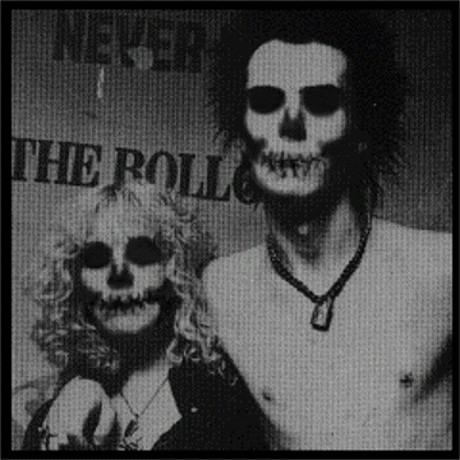
The Sex Pistols were never that bad. They had strong songs, and strong pop sensibilities. Pop is great, guys. There’s nothing wrong with pop. What the world doesn’t need, on the other hand, is fifty thousand wannabes who think playing with your strings out of tune makes you a pioneer. That’s what everyone tried in the 90s, and we’re still feeling the aftereffects. I think the grating unmusicality of the grunge era is the time rock music really started to die.
Don’t argue. It’s undeniably happened. Let’s try an exercise: what was the defining rock album of the 60s? Sgt Pepper. The 70s? Led Zeppelin IV. The 80s? Several contenders, ranging from Black in Back to Appetite to Destruction to The Joshua Tree. The 90s? Nevermind.
The 00s? I…can’t think of any. A few albums like Hybrid Theory and The Black Parade captured a fleeting zeitgeist – a few years later everyone was embarassed to even remember them. The first half of the 2010s have proven likewise disappointing. Sometime after grunge died, we’d apparently made all the great rock albums it was possible. Or maybe great rock albums are still being made, but nobody listens to them. Albums that should make a splash now disappear without a ripple.
Is it possible that rock alienated itself from the public by being boring? Rob Zombie thinks so. “Everybody thought it was cool to be anti-rock star. But in a way they sort of anti-rock starred themselves right out the door.” Once, rock music was thrilling and visceral. But in the hands of Generation X, it became a guy in flannel staring at his shoes, whining about his feelings.
Once rock stars stopped looking and acting like rock stars, hip hop, rave, and house moved in to fill the gap. A turntable now has the same cultural cachet that a stack of Marshall amps did in 1981. The idea of dancing to a live band seems as weird as the tweed and brilliantine of the Sex Pistols interviewers, and electronic music now has a stranglehold on everything except nostalgia.
Did rock and roll really commit suicide? I think so. Suicide attempts are dramatic and powerful. They can feel enervating, and thrilling. They make a great cry for attention. But there’s a danger: you might really actually kill yourself. Sometime after 1991, rock and roll hacked too deep into its wrist, severed the ulnar artery, and let itself spill out all over the floor.
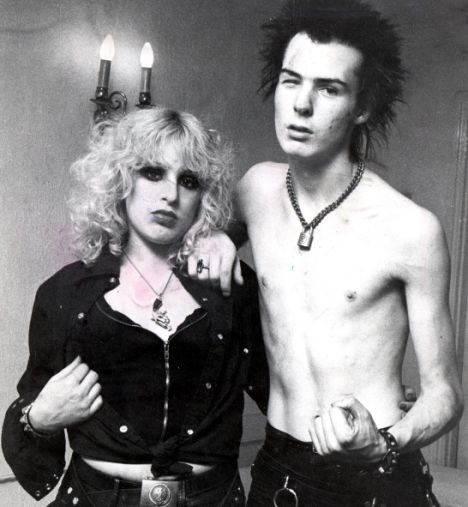 Watching an old interview with the Sex Pistols can be funny. We’ll get a spiel about how crazy they are, how they embody burn-the-bridges musical terrorism…then the interview starts, and they seem disappointingly normal. Nothing ages as poorly as rebellion. They were ahead of their time, but not too far ahead. Both Johnny Rotten and Sid Vicious would look dull at a 21st century Hot Topic. Time has murdered their shtick.
If anything looks bizarre to a modern viewer, it’s the pomaded, coiffed, tweed-wearing creatures in the interviewer’s chair.
Scott Alexander once said “Virtue is appropriated by people wanting to signal smug superiority. Others start by condemning the signaling, but move on to condemn virtue.” Punk rock was like that. It started out as a reaction against the pretensions of popular music at the time (17 minute progressive rock opuses about walruses mating, and all that), but soon became an all-out attack against music itself.
Punk rock tore down every idea about music, especially that it has to be good. Having standards became an indicator of poseurdom. Can you play your instrument correctly? Suspicious. Do you sing on key? Doubly suspicious. Do you have lots of fans? That’s the worst of all. Might as well write “fake punk” and “sellout” on your guitar case.
Which is funny, considering that the authenticity of the Sex Pistols is far from unimpeachable. Yes, their image was calculated, and they were stage-managed. To hear Malcolm McLaren tell it, they were little more than a boy band formed to promote his clothing line. But maybe even trying to be authentic is inauthentic. Maybe the realest band is actually the fakest band, and vice versa, and thus the Ouroborus eats its own tail.
“Ever get the feeling you’ve been cheated?” Johnny Rotten sneered at the final Sex Pistols show, in San Francisco. The band was coming apart at the seams. They were wrapping up a tour where McLaren had deliberately booked them for venues in the deep south, to maximize the controversy (and if one of them got blasted to death by a drunk redneck!). Sid Vicious was already picking up speed into a terminal death spiral. He was a few days away from a valium and methadone-induced coma. If this is real music, maybe fake is better.
Even if the Pistols were “real”, most of their fans weren’t. One gets the feeling that the Pistols were growing disillusioned by the social movement they were meant to be heading up. The Winterland promoter estimated that only about 10-15% of the audience were genuine punks. The rest of them were just normies who’d come to see the freaks. For the average person in that crowd, it was just a kind of zoo where you can throw food at the animals.
Maybe it’s not a coincidence that after the Sex Pistols ended, Johnny Rotten terminated what seemed like a prosperous career as Iggy Pop v2.0, and started releasing utterly unmusical albums as Public Image Ltd. Maybe he wanted to plant his flag firmly on the side of rebellion, and the Sex Pistols weren’t breaking enough soil for his taste. People will be listening to the Pistols record for far longer than anything PIL will ever release, but that’s a small price to pay for the most valuable currency of punk rock: authenticity.
Johnny Rotten once said “only the fakes survive”. Which he himself did, in a way. But not very well.
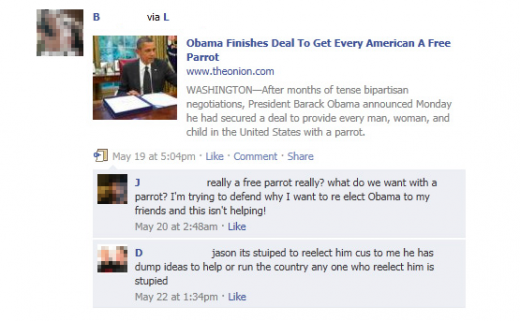 We’ve all seen it before. It’s like an Internet Walk of Shame. Someone posts a link to an outrageous, offensive article written by some group or organisation they hate, which they comprehensively refute/rebut/demolish in a self-satisfied, 3,000 word orgy of masturbation (excuse the oxymoron). At the end, they take a bow, clearly expecting to bask in customary Internet Applause (tap your fingers lightly on the keyboard).
Unfortunately, someone replies “isn’t that a satire site?” Further examination reveals that yes, it is a satire site. The original poster’s embarrassment becomes palpable. After some squirming, they invariably reply “well, it just goes to show how messed up [evil group] is! It’s impossible to tell satire from their real opinions!” Then the onlookers perform an awkward Internet Foot Shifting (you flip closed two of your keyboard’s legs along a diagonal axis, so that it flops awkwardly from one side to another), until someone gets up the courage to say “it’s not that, mate. You’re just terrible at detecting satire.”
People will cite Poe’s Law, which commonly means: “it is impossible to create a parody of extremism or fundamentalism that someone won’t mistake for the real thing”. I prefer to think of it as meaning “I got tricked into thinking Landover Baptist was real, and I want to blame some group delusion instead of the fact that my mum raised a gullible little pissmaggot.”
With that said…is there an easy way to tell real opinions from satire, if you’re not sure? Is there a forensics kit you can apply to an ambiguous piece of writing?
I think so, but it’s hard. The key issue is that a lot of people want to be fooled by satire, they want to believe the worst about the group they hate. But here’s what I do:
1. Look for lots of adjectives, adverbs, and repetition. Satirists are venally afraid that you won’t understand the joke, or that you’ll fail to appreciate their wit. They won’t say “Obama’s policies…” they’ll say “Obama’s socialist marxist hitlerist policies…” They can never resist overegging the pudding.
2. Real opinions are self-consistent. Satire will contradict itself for a laugh. This is very important. It doesn’t matter if you think [evil group] are hypocrites, there has to be a kind of internal reality to what they believe. Satire reminds me of defense attorney Richard Hayne’s approach to building a case. “Say you sue me because you say my dog bit you. Well, now this is my defense: a) my dog doesn’t bite. b) my dog was tied up that night. c) I don’t have a dog.”
3. What’s the teleological point behind the writing? Dig deep, and use your reading comprehension. Ask “what’s reading this meant to make me feel?” Maybe the superficial point is that immigrants should be made to keep one limb within a detention center at all times. But what’s the real point? Are you supposed to laugh? Are you supposed to write to your elected politician? If you don’t understand, ask yourself this: why is Wile E Coyote never successful in catching the Road Runner? The superficial reason is that his inventions break and send him flying off a cliff. The deep reason is that he’s in the hands of writers who think it’s comical that he fails. Similarly, try to read between the lines.
Hopefully this was helpful enough for you to perform a customary Internet Head Nod (grab your monitor and sagely raise and lower it a few times.)