
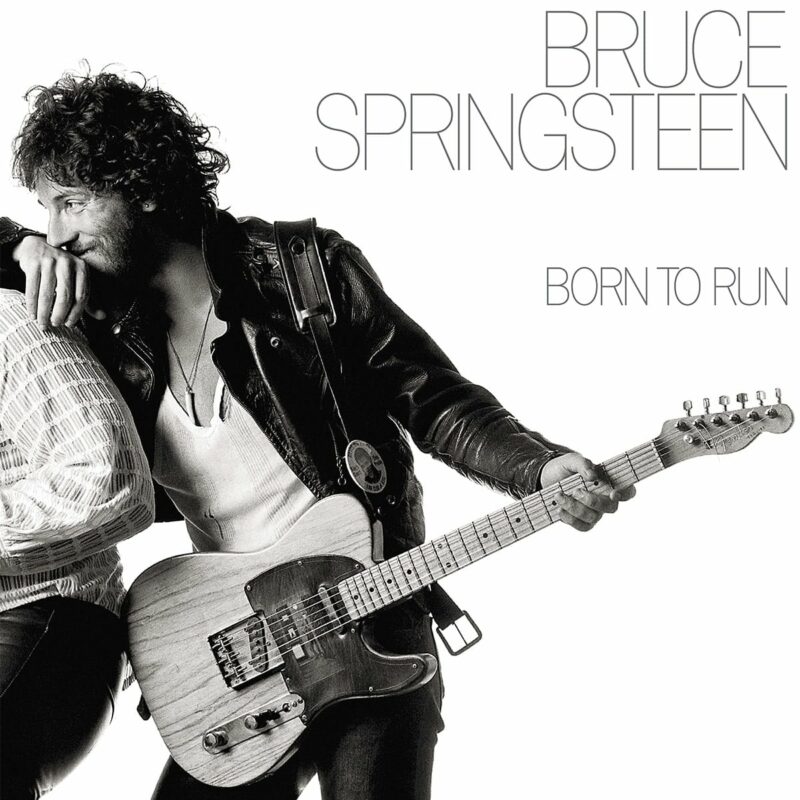
The writer’s eternal quest to become a Bruce Springsteen Enjoyer continues with this record.
“Continues?” Yes, Incontinent Reader. I have been struggling in secret with Bruce Springsteen Not-A-Fan Syndrome for years. A lifetime. I don’t always tell about you my struggles, because I don’t feel we have that kind of relationship.
Basically, I was radicalized against Springsteen in my youth, and it wasn’t his fault. I used to listen to the radio show called Opie and Anthony, and co-host Anthony Cumia would do a cruelly accurate impression of the Boss’s singing voice that I have never been able to unhear (“JOY-SEY CITY, BABY! A-WAHH-WAHH!”). So that makes it tough for him.
Apparently every Bruce record is a similar story: between two and four huge irrefutable rock classics like “I’m On Fire” and “Candy’s Room”, along with many other songs that are considerably…more refutable. So refutable that they almost often seem wrapped in email forward tags with MAKES U THINK !! in the subject line. Only the mediocre are always at their best, and I agree with the hardcore fans that Bruce is not a mediocre musician.
Yet even the album’s greatest tracks, like the astonishing “Thunder Road”, have little bits where my reaction isn’t “fuck yeah!” but “…that doesn’t quite work.” He’s overworking the dials, losing the effect he’s striving for. “Well, I got this guitar, and I learned how to make it talk” followed by a cocky twangy pentatonic lick, like we don’t know what a guitar is. It’s condescending and freezes me out a bit: he becomes like a douchey guy who’s brought a guitar to a party.
But earlier, there’s a fantastic line. “Show a little faith, there’s magic in the night / You ain’t a beauty, but hey, you’re alright.” On the page this reads like an insult, but he delivers it with such charm and panache that it reads as “a guy who loves his girl so much they share a wavelength: he knows she’ll understand it’s a joke”.” This is exactly how many couples talk to each other. He totally sells his character here: Bruce could have been an actor. Maybe he is an actor. Truly, are we not all actors, on this grand proscenium called “life”? Except some of us are “townsman #45” and “choir #20” and some of us are shooting up backstage and some of us are being chased by a bear. I don’t know what your situation is, sorry.
Born to Run is a nice little CV of an album. The two albums before have some label interference and artistic confusion. Most albums after it (particulary Nebraska and Tunnel of Love) feel like a commentary and reaction to his own massive fame.
Bruce Springsteen is interesting as a figure: he’s one of the first rockers who feels properly “native” to rock music. Most previous stars of Bruce’s luminance have their beginnings in a pre-rock style (Elvis in gospel, the Beatles in skiffle, Dylan in folk) or had other paths they could have taken. Can you imagine what David Bowie would have been, if rock hadn’t been invented? Yes, easily: he’d be jazzman, a cabaret light entertainer (with a puppet show, a mime routine, or ventriloquist act), or a Captain Beefheart cult figure. Probably all at once. But it’s hard to imagine what Bruce Springsteen would be doing in that world.
Yeah, I guess there’s some Roy Orbison in his voice. Some country and western style storytelling, too. Beyond this, he seems inseparable from rock music. No rock and roll, no Bruce Springsteen. He seems to have sprung from it as Athena did from Zeus’s forehead.
“Thunder Road” and “Night” (my personal favorite) and “Born to Run” are all great songs, partly because they close us off from the future. Where is the road go? What are we hoping to find in the night? Where do we run? No idea. Also, who cares? You sense you’re listening to a life that might be happy now, but will surely end unhappily. But that’s tomorrow’s worry. The sad part has not yet come. In real life, you have no choice but to roll through into the future. In a song, you can repeat time, hitting replay as often as the music will allow. And Bruce Springsteen’s work clearly allows it more times than most.
He is inconsistent. To literalize the rock metaphor Bruce Springsteen is not a single mountain, but a mountain range. Yes, his peaks are high. To climb the Everests and K2s of “Born to Run” etc you must navigate the base camps of “Tenth Avenue Freeze-Out” and “Meeting Across the River”. And the dull near ten-minute “Jungleland” is like being detained at riflepoint by the PLA at the China-Nepalese border while they ask questions about your visa.
“Tenth Avenue Freeze-Out” does have that amazing Clarence Clemonts intro, and lush, sensitive strings by Steven van Zandt. I wonder how many no-show jobs that one cost. How many boxes of zitis. How much gabagool and goomars and oh shut up.
It’s astonishing how ripped-off this album is. All my life I’ve been having “watching Shrek without knowing any fairytales” moment where I’m really hearing pastiches of Born to Run. The “Bat Out of Hell is a secret Born to Run parody album” feels more credible now that I’ve heard “Night”, with the same chord progression as in the “Bat Out of Hell” final movement.
But there’s a problem: rock music usually has a looseness and liberty. Springsteen’s music is drenched in totalizing perfectionism that often proves excessive, even oppressive. The thud and clank of the steel mill echoes from Born to Run‘s soul. It’s an album made of engineer-grade grade titanium, fashioned to millimeter tolerances, its pieces bolted and torqued tight. It’s both amazing and slightly oppressive in how…crafted it is. Crafted like a beartrap, you might say.
The BruceBase Wiki is loaded with wince-inducing asides like “The sax solo on “Jungleland” alone took 16 hours of work” and “The story that the song “Born To Run” took six months to complete is well known, but “Jungleland”, “Thunder Road”, and “Backstreets” all took longer.” The master tape must be so transparent that you can use it to tape broken reading glasses back together.
But if the album’s laboriousness does undercut its effect a bit (for me, anyway), there are pleasures to be had. This is one of the best produced records of the 70s. Every sound is so lush and rich and expensive. I don’t want to listen to it, I want to sprawl out on it like it’s a cabriole sofa, sinking into the rich tones of Clarence Clemons’s sax, rubbing my knuckles on Roy Bittan’s bell-like glockenspiel notes. It has a Tony Visconti-esque care to its sonic composition. But there’s fury raging under it too, tree roots cracking a sidewalk. You sense that Bruce was at war with his own work, remorselessly beating it into shape. He certainly captures Spector’s Wall of Sound, even if he often just uses it to build a prison.
Bruce’s songs about the call of the highway all feel like retreats from himself, fantasies where he’s a different, less worried man. A man who holds life with light hands, and let’s things go. I hear lightness and freedom in his words, but little in the music itself. I hear blood and sweat and grit and iron. I hear Bruce forging his monumental creative vision from what must have seemed like unbearably frustrating tools: tape and wood and microphones and fallible, exhausted musicians (he can’t have been an easy man to work with in the studio). Despite the loveliness and craft it’s often a grueling listen. You’re all too aware you’re listening to take #241, hearing another roll of tape going thud in the trash, with the E Street Band scowling and setting up for the downbeat once again, hoping The Boss will finally be happy with this one, so they can go home.
Like Kubrick, Bruce Springsteen cannot be faulted for his craftsmanship or taste. But like Kubrick I often wish there was a bit more simple joy and spontanuity in his work. His world can be a dark place. Darker than the night. Even the stripped down Nebraska feels very calculated. A record that tries to get ahead of the listener’s idea of what a Bruce Springsteen record is and subverting it. There’s magic in the night. But what’s the use of it, when you can’t forget the day?
No Comments »
Comments are moderated and may take up to 24 hours to appear.
No comments yet.