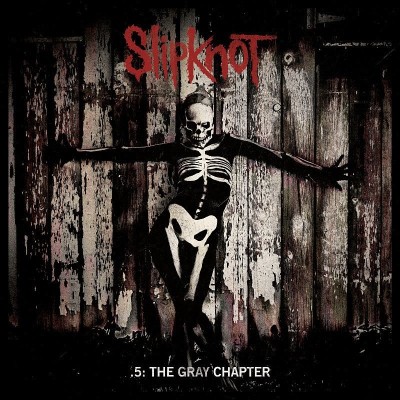
 “Sarcastrophe” is a good start. Hard to be negative about “The Negative One”. “Custer” made me giggle.
On the whole, Slipknot do very little good here. They were always Insane Clown Posse with guitars, so I’m glad they’ve reverted to the fruity, unpretentious style of S/T thru to Vol 3 (or perhaps you’d prefer to hear their opinions about the Iraq war). But the songs aren’t catchy or interesting. This is a big problem.
Most of them ride predictable Machine Head-inspired groove riffs and double bass flurries – this is the type of album that make you feel like a sorcerer because you can predict exactly what will come next. Others attempt emotion and land with a splash in boredom.
“Approaching Original Gayness” (or whatever) sounds like “Before I Forget” with a sugary clean-sung chorus tacked on in a way that doesn’t make sense. Lead single “The Devil in I” starts out with an animated uptempo riff, then slows down and immediately starts spiralling the toilet. Boring idea after boring idea. I hate this song.
“Skeptic” is a tribute to bassist Paul Gray, who recently caught a bad case of dead. It has a cute chorus and not much else. “Goodbye” is long and tedious, speeding up and slowing down seemingly at random. If this song was an actual “goodbye” it would be an unwanted houseguest you’re trying to shoo out and who keeps trying to tell you his life story. Shut up already. Save it for your memoir. No, I won’t read it there, either.
At times the album barely sounds finished. The songs change from section to section haphazardly, and the tracklisting induces further whiplash. “Custer” and “The Negative One” have a nearly identical screech sample and a similar breakdown chorus…and they’re separated by just a 2 minute interlude. It’s like listening to the same song twice.
The occasional interesting riff and energetic moment keeps things moving forward and patches over the bad moments somewhat. This is their first album without Joey “needs a stepping stool to reach the drumkit” Jordison, which was a turn for the better. Judging from Scar the Martyr, he was responsible for the band’s self-serious period. But the band doesn’t exactly return to form, either, mostly because Slipknot never really had a “form” to return to.
A few entertaining moments. At least 40 minutes of narcolepsy inducing crap. All hail Slipknot.
 Wanna live dangerously? Play a PC game from 1990-1995 that has “2” in the title.
Companies used to have almost no idea of what a sequel to a computer game should look like. Should they be like level packs? Should they be entirely new games? The “shareware” model further complicated things – you’d have part 1, the free version, and parts 2 and 3, which you paid for. Publishers were cutting up and slicing games like lunatic sushi chefs, and “sequel” could mean absolutely anything.
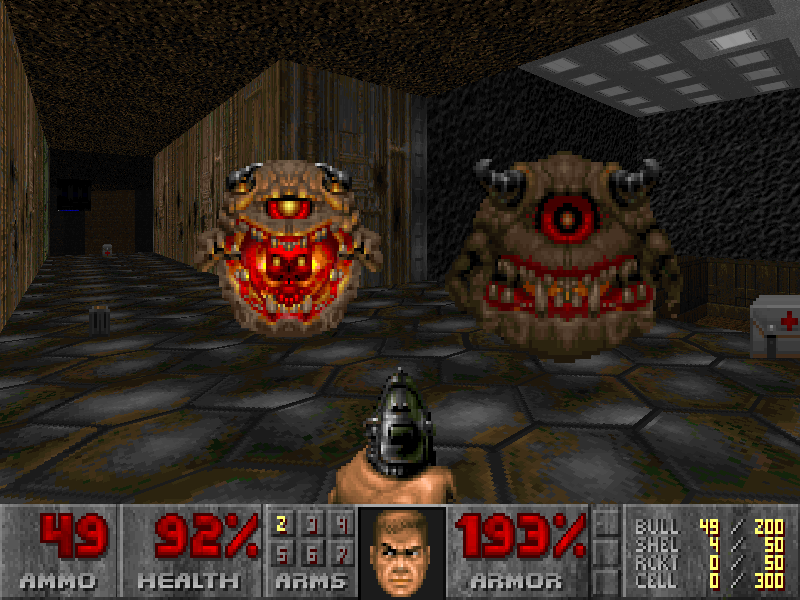
Doom 2 was part of the problem. It has 32 new levels, one new weapon, and a few new enemies. Do you call that a sequel? I call it a glorified level pack. Some accountancy particulars set Doom 2 apart from the original (chiefly the fact that it was sold in stores rather than through mail-order), but so what? Imagine if Street Fighter II was Street Fighter I with a new character and some new backgrounds. You’d call shenanigans.
The new weapon is the super shotgun. It’s very satisfying to clear a room of zombies in one blast, but it disrupts the balance of the game. It’s just too effective – you never again use the regular shotgun, so why still have it in the game? (Yes, the shotgun has a tighter spread and is better for long-range fighting, but the chaingun’s better in that category).
The new enemies are a little mixed. The pain elementals and revenants are just tedious and annoying, no fun to fight. The chaingun zombies are neat. The arch-vile is the most inspired creation: a “healer” that can revive dead enemies. All the old enemies are back, including a fair few cyberdemons. At one point you have to face a cyberdemon and mastermind at the same time (the battle becomes anticlimactic when you realise you can trick them into killing each other).
The new levels are the meat of the game. Most of them are either designed by Romero or Peterson. Romero’s levels are aesthetically beautiful, and actually evoke the feeling that you’re in hell. Peterson’s are ugly, slapdash, and gimmicky. The contrasting approach to level design gives the game a bipolar feel – Romero actually gets what Doom’s about (bringing the atmosphere of a Cronenberg film to your computer screen), while Peterson is intent on dragging id Software back to the arcades.
There’s not much to say about Doom 2. If you liked the original game, this has more of the same. But it doesn’t push the envelope. The envelope remains super-glued to the table. If you’re new to the series, you might as well start with Doom 2. Once you have the super shotgun, it’s awfully hard to play a game without it.
But normally the genre-defining classics and the cheap cash-ins are made by different people. Who would have thought that in this case they’d be coming from the same studio?
 As I’ve said elsewhere, you can’t really call Manowar a band any more. For the past twenty years they’ve been bassist Joey DeMaio’s Little Alimony Fund That Could, a relentless cash generating machine that probably actually isn’t all that relentless…or cash generating.
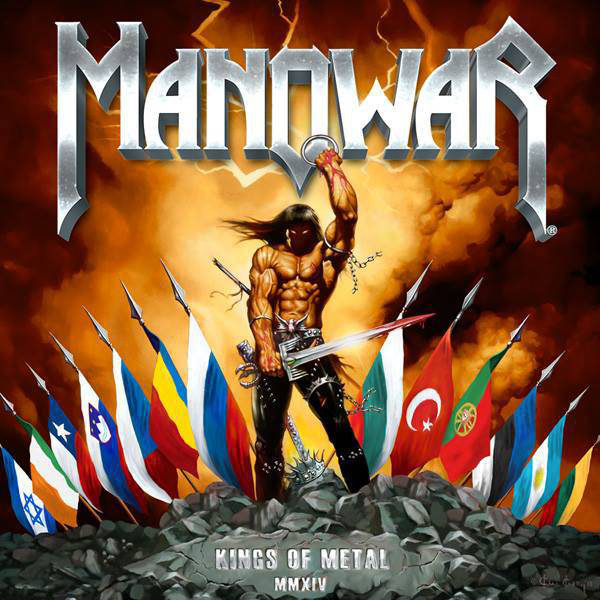
Somewhere around 1992, they lost all their work ethic in the studio, and started filling the gaps with compilations, remasters, re-releases, and a neverending deluge of live albums (if you’re a Manowar completist, you’ve probably bought “Battle Hymns” at least a dozen times.) Here’s Joey DeMaio’s latest “gimme your lunch money” – a re-recording of the band’s legendary 1990 album Kings of Metal.
What a terrible idea.
If you ask a group of Manowar fans to pick the band’s greatest album, half will immediately answer Kings of Metal, and the other half will not be able to agree on a challenger to the throne. I’ve always found it inconsistent and half-cocked, but at its best it’s a superb slab of early power metal, and most of its shortcomings are found at the conceptual level – you can’t really “fix” it. So why this re-recording? Because Joey DeMaio likes caviar.
They changed the tracklisting. Now we start with “Hail and Kill” – fantastic on the 1990 version, dull and slowed down here. Eric Adams’ voice is haggard, clearly Frankensteined together from many edits and overdubs. Then we’ve got the title track. “Other bands play, Manowar kill!” Other bands play, Manowar bilk their fans. “Heart of Steel” sounds pretty solid. I’ll say this, they nail ballads much better than they used to.
Raging speed-fest “Wheels of Fire” is featured here as “On Wheels of Fire”, and sounds muddy, downtuned and shit-awful. The drums actually sound weaker than they did in 1990 – the kind of relentless percussive assault you get from tapping a pencil on a school desk. Then there’s “Blood of the Kings”, which Joey makes annoying as hell by adding all sorts of extra shout-outs to fans in various countries “Argentina, Japan, Portugal, Lithuania, Canada, Spain, Israel…” – is this a geography quiz? Kings of Metal‘s lesser tracks like “Kingdom Come” were mediocre then and remain mediocre now. Note that they didn’t even bother re-recording “Pleasure Slave.”
Eric Adams is showing his age. He used to hit all sorts of ungodly notes in E, now he stays far away from them in D. Joey DeMaio’s a bit too prominent in the mix, frequently turning the album into mud. Karl Logan is actually a saving grace. Most Manowar fans are a bit leery of him, but his dry whammy-abusing style works really well for the band. One of Kings of Metal MMXIV‘s rare treats is a guitar instrumental of “Heart of Steel”, which sounds really powerful and emotional.
But ultimately, Kings of Metal MMXIV is underwhelming and unimpressive – and even if it had been executed perfectly it would still have been a lame cash grab. Why am I still a fan of Manowar? Because Joey DeMaio VERY occasionally decides to boost Magic Circle Music’s bottom line by releasing excellent music. This isn’t one of those times.