The writer’s eternal quest to become a Bruce Springsteen Enjoyer... | Music / Reviews | Coagulopath

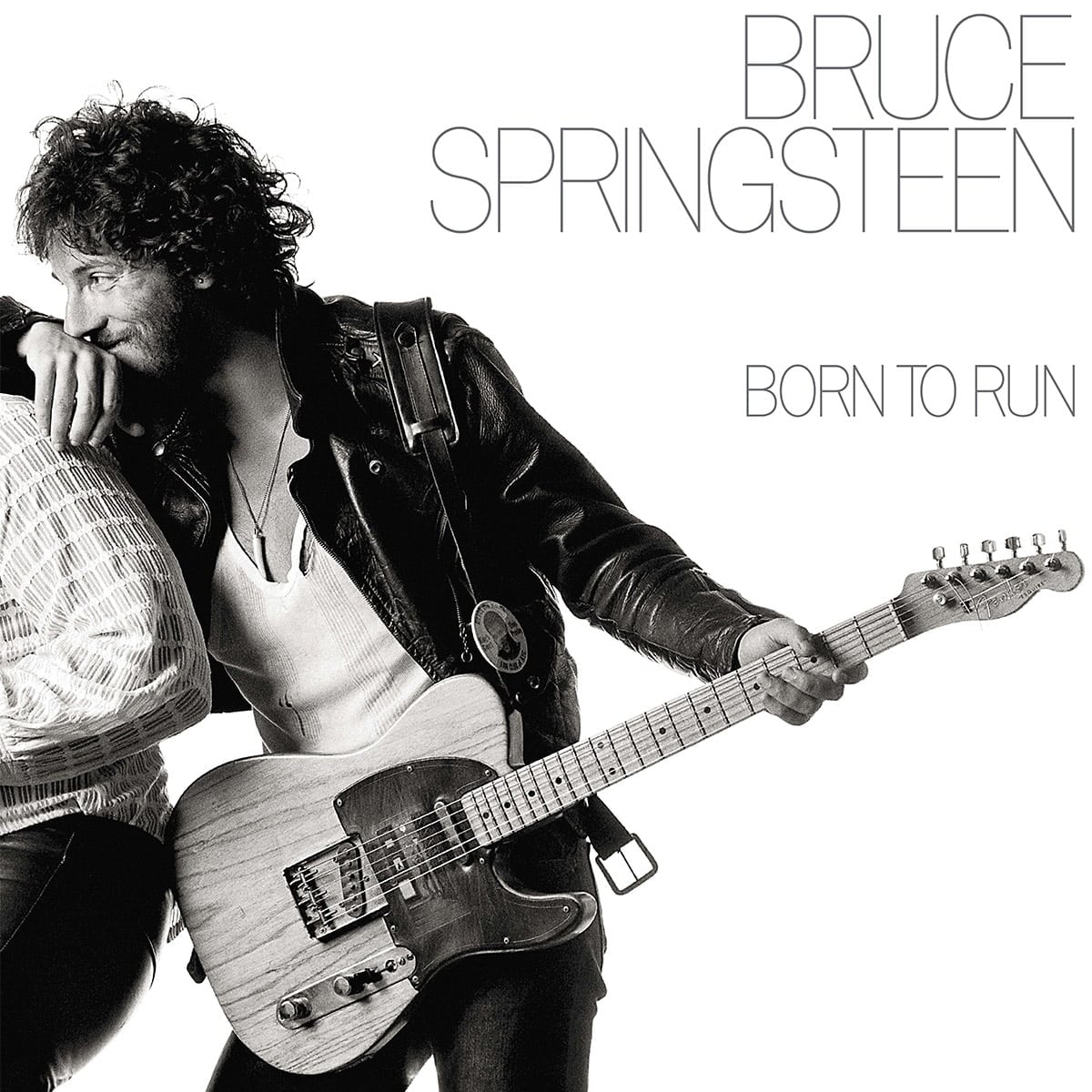
The writer’s eternal quest to become a Bruce Springsteen Enjoyer continues with this record.

“Continues?” Yes, Incontinent Reader. I have been struggling in secret with Bruce Springsteen Not-A-Fan Syndrome for years. A lifetime. I don’t always tell about you my struggles, because I don’t feel we have that kind of relationship.

Basically, I was radicalized against Springsteen in my youth, and it wasn’t his fault. I used to listen to the radio show called Opie and Anthony, and co-host Anthony Cumia would do a cruelly accurate impression of the Boss’s singing voice that I have never been able to unhear (“JOY-SEY CITY, BABY! A-WAHH-WAHH!”). So that makes it tough for him.

Apparently every Bruce record is a similar story: between two and four huge irrefutable rock classics like “I’m On Fire” and “Candy’s Room”, along with many other songs that are considerably…more refutable. So refutable that they almost often seem wrapped in email forward tags with MAKES U THINK !! in the subject line. Only the mediocre are always at their best, and I agree with the hardcore fans that Bruce is not a mediocre musician.

Yet even the album’s greatest tracks, like the astonishing “Thunder Road”, have little bits where my reaction isn’t “fuck yeah!” but “…that doesn’t quite work.” He’s overworking the dials, losing the effect he’s striving for. “Well, I got this guitar, and I learned how to make it talk” followed by a cocky twangy pentatonic lick, like we don’t know what a guitar is. It’s condescending and freezes me out a bit: he becomes like a douchey guy who’s brought a guitar to a party.

But earlier, there’s a fantastic line. “Show a little faith, there’s magic in the night / You ain’t a beauty, but hey, you’re alright.” On the page this reads like an insult, but he delivers it with such charm and panache that it reads as “a guy who loves his girl so much they share a wavelength: he knows she’ll understand it’s a joke”.” This is exactly how many couples talk to each other. He totally sells his character here: Bruce could have been an actor. Maybe he is an actor. Truly, are we not all actors, on this grand proscenium called “life”? Except some of us are “townsman #45” and “choir #20” and some of us are shooting up backstage and some of us are being chased by a bear. I don’t know what your situation is, sorry.

Born to Run is a nice little CV of an album. The two albums before have some label interference and artistic confusion. Most albums after it (particulary Nebraska and Tunnel of Love) feel like a commentary and reaction to his own massive fame.

Bruce Springsteen is interesting as a figure: he’s one of the first rockers who feels properly “native” to rock music. Most previous stars of Bruce’s luminance have their beginnings in a pre-rock style (Elvis in gospel, the Beatles in skiffle, Dylan in folk) or had other paths they could have taken. Can you imagine what David Bowie would have been, if rock hadn’t been invented? Yes, easily: he’d be jazzman, a cabaret light entertainer (with a puppet show, a mime routine, or ventriloquist act), or a Captain Beefheart cult figure. Probably all at once. But it’s hard to imagine what Bruce Springsteen would be doing in that world.

Yeah, I guess there’s some Roy Orbison in his voice. Some country and western style storytelling, too. Beyond this, he seems inseparable from rock music. No rock and roll, no Bruce Springsteen. He seems to have sprung from it as Athena did from Zeus’s forehead.

“Thunder Road” and “Night” (my personal favorite) and “Born to Run” are all great songs, partly because they close us off from the future. Where is the road go? What are we hoping to find in the night? Where do we run? No idea. Also, who cares? You sense you’re listening to a life that might be happy now, but will surely end unhappily. But that’s tomorrow’s worry. The sad part has not yet come. In real life, you have no choice but to roll through into the future. In a song, you can repeat time, hitting replay as often as the music will allow. And Bruce Springsteen’s work clearly allows it more times than most.

He is inconsistent. To literalize the rock metaphor Bruce Springsteen is not a single mountain, but a mountain range. Yes, his peaks are high. To climb the Everests and K2s of “Born to Run” etc you must navigate the base camps of “Tenth Avenue Freeze-Out” and “Meeting Across the River”. And the dull near ten-minute “Jungleland” is like being detained at riflepoint by the PLA at the China-Nepalese border while they ask questions about your visa.

“Tenth Avenue Freeze-Out” does have that amazing Clarence Clemonts intro, and lush, sensitive strings by Steven van Zandt. I wonder how many no-show jobs that one cost. How many boxes of zitis. How much gabagool and goomars and oh shut up.

It’s astonishing how ripped-off this album is. All my life I’ve been having “watching Shrek without knowing any fairytales” moment where I’m really hearing pastiches of Born to Run. The “Bat Out of Hell is a secret Born to Run parody album” feels more credible now that I’ve heard “Night”, with the same chord progression as in the “Bat Out of Hell” final movement.

But there’s a problem: rock music usually has a looseness and liberty. Springsteen’s music is drenched in totalizing perfectionism that often proves excessive, even oppressive. The thud and clank of the steel mill echoes from Born to Run‘s soul. It’s an album made of engineer-grade grade titanium, fashioned to millimeter tolerances, its pieces bolted and torqued tight. It’s both amazing and slightly oppressive in how…crafted it is. Crafted like a beartrap, you might say.

The BruceBase Wiki is loaded with wince-inducing asides like “The sax solo on “Jungleland” alone took 16 hours of work” and “The story that the song “Born To Run” took six months to complete is well known, but “Jungleland”, “Thunder Road”, and “Backstreets” all took longer.” The master tape must be so transparent that you can use it to tape broken reading glasses back together.

But if the album’s laboriousness does undercut its effect a bit (for me, anyway), there are pleasures to be had. This is one of the best produced records of the 70s. Every sound is so lush and rich and expensive. I don’t want to listen to it, I want to sprawl out on it like it’s a cabriole sofa, sinking into the rich tones of Clarence Clemons’s sax, rubbing my knuckles on Roy Bittan’s bell-like glockenspiel notes. It has a Tony Visconti-esque care to its sonic composition. But there’s fury raging under it too, tree roots cracking a sidewalk. You sense that Bruce was at war with his own work, remorselessly beating it into shape. He certainly captures Spector’s Wall of Sound, even if he often just uses it to build a prison.

Bruce’s songs about the call of the highway all feel like retreats from himself, fantasies where he’s a different, less worried man. A man who holds life with light hands, and let’s things go. I hear lightness and freedom in his words, but little in the music itself. I hear blood and sweat and grit and iron. I hear Bruce forging his monumental creative vision from what must have seemed like unbearably frustrating tools: tape and wood and microphones and fallible, exhausted musicians (he can’t have been an easy man to work with in the studio). Despite the loveliness and craft it’s often a grueling listen. You’re all too aware you’re listening to take #241, hearing another roll of tape going thud in the trash, with the E Street Band scowling and setting up for the downbeat once again, hoping The Boss will finally be happy with this one, so they can go home.

Like Kubrick, Bruce Springsteen cannot be faulted for his craftsmanship or taste. But like Kubrick I often wish there was a bit more simple joy and spontanuity in his work. His world can be a dark place. Darker than the night. Even the stripped down Nebraska feels very calculated. A record that tries to get ahead of the listener’s idea of what a Bruce Springsteen record is and subverting it. There’s magic in the night. But what’s the use of it, when you can’t forget the day?
The band[1]Sascha and Loble aside was nearly in their fifties... | Music / Reviews | Coagulopath

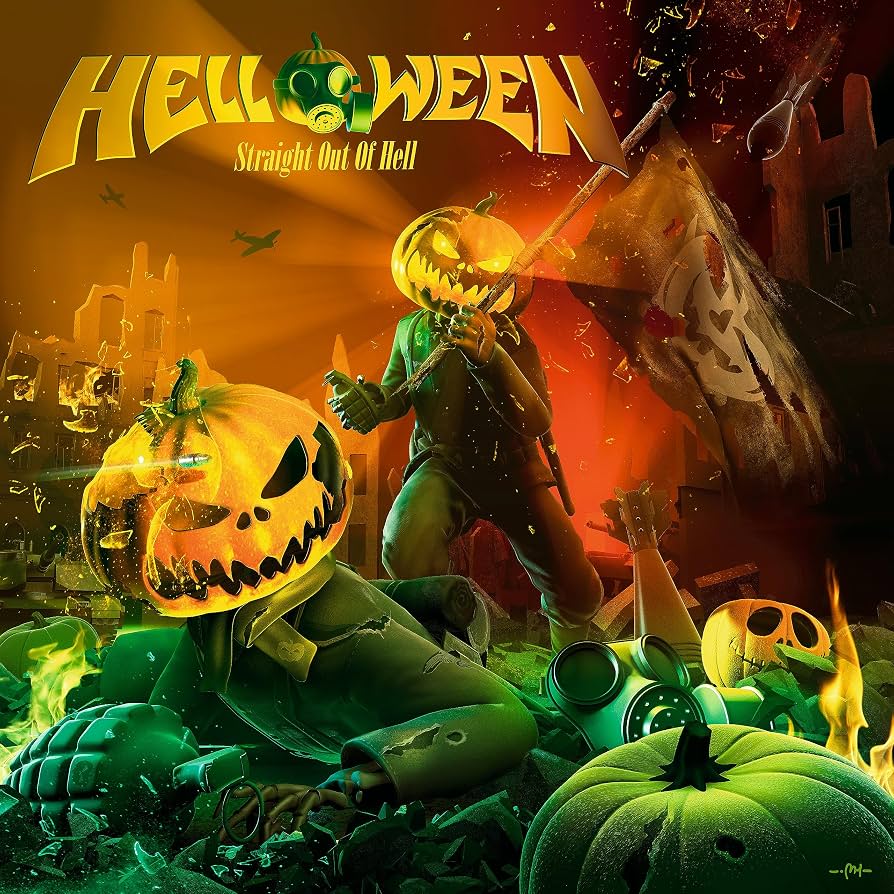
The band[1]Sascha and Loble aside was nearly in their fifties when they wrote *Seven Sinners*. Fifty’s quite an age to be playing in a band called “Helloween”. That thought would probably occur to you during band fights and label disputes and twenty-hour layovers to Tokyo. “I am a fifty year old in Helloween.”

It could be worse—the German power metal scene has no shortage of embarrassing band names. You could be in Edguy. You could be in Gloryful. You could be in Pink Cream 69 (a certain Helloween alumnus actually was.) You could be in Brainstorm. Most direly, you could be in Custard. Encyclopedia Metallum advises that “Chris Klapper is the only original member still in Custard.”*Thank God, the others got away. I mean, obviously my thoughts and prayers are with Chris Klapper and I don’t mean to trivialize his suffering, but at least there’s not five or six people tied to those particular railway tracks, you know?

Helloween further standardize their modernistic sound on Seven Sinners. There’s only about two or three experiments. It’s the first Helloween ever to open with a slow track, the doomy “Where the Sinners Go”. “Raise the Noise” has a Jethro Tull flute solo. The closing track is quite unique, and unlike anything they’ve attempted yet. Otherwise, it’s a very strict remanation of their sound.

The album is also notably heavy: probably their most brutal yet. The only competition is The Dark Ride, which has some darker songs (particularly “Escalation 666”) but also a lot of light power metal. This album is consistently dark. There’s no comedy or silly business: the lyrics are about drug abuse, schizophrenia, and so on. Even the piano-led ballad, Deris’s “The Smile of the Sun” is piercingly bittersweet: the fragrant juice from a crushed flower.

I do find it less charming than *The Dark Ride*. It needs more texture and more light to balance the shade. It’s action-packed and heavy but fairly one-dimensional. Many songs just do not work that well, and a lot of this weaker material is tracklisted at the start. (And some of its greatest songs aren’t on the album at all!)

“Where the Sinners Go”, “Are You Metal?”, and “Who Is Mr. Madman?” are just not compelling song. Sorry. The first is slow and draggy. The others are fast but have weak hooks (“Who is Mr. Madman?” reuses the melody of “Perfect Gentlemen”, and has a spoken word intro by Bill Byford of Saxon. As always, “remember when?” is the dullest form of conversation). “World of Fantasy” is another dud. Just the blandest power metal I’ve ever heard. It sounds like a *Rabbit Don’t Come Easy* song: lots of flash and noise with emptiness at its core.

Weikath’s “Raise the Noise” and Deris’s “Long Live The King” redeem the album for me. Both tracks are ferocious and catchy riff monsters with great choruses—Bauerfeind’s relentless guitar-focused mix makes them as muscular as steroid-pumped gorillas. Deris’s vocals are in top form as well.

“The Smile of the Sun” is another excellent song, then we’re back in fillertown. Sascha’s “My Sacrifice” and Deris’s “Not Yet Today”/”Far in the Future” end the album in good order.

“Far in the Future” is just insane, the song “Who Is Mr Madman?” wishes it was. A seven minute quiet/loud game with guillotine-suspended-by-a-thread tense sections punctuated by explosive steeplechase thrash sections. There’s an energetic Jimi Hendrix-evocative riff section in the middle that evokes *Chameleon* (of all things to evoke!), along with Gamma Ray. A great song.

The bonus tracks for Japan are surprisingly incredible! This has the best bonus material of any Helloween track yet. “I’m Free” and “Aiming High” in particular are blazingly fast and memorable power metal albums. They honestly could have bumped one or two lesser album tracks, like “World of Fantasy” and “If A Mountain Could Talk”, for one or both of them.

The album is a regress from the one before it, but it’s nowhere near actively bad. I cannot get offended by *Seven Sinners* when there are actual tragedies in the world, like innocent humans playing in a band called Custard. I just wish Helloween had changed their sound by adding things instead of removing them. But it’s dark and nasty and heavy enough: sometimes Halloween candy has razorblades in it.

References

References
1 Sascha and Loble aside
White Zombie lived Charles Beaumont’s quote about showbiz. “…like climbing... | Music / Reviews | Coagulopath

White Zombie lived Charles Beaumont’s quote about showbiz.

“…like climbing to the top of a mountain of manure to pluck one perfect rose– only to discover that you’ve lost your sense of smell.”

They slaved for a decade to the obdurate disregard of the record business. Too art school for CBGB’s and too tasteless for East Village, they floated between punk rock, psychedelic noise rock, and heavy metal, depending on which guitarist was in or out. They were always broke, sometimes homeless, and occasionally starving. Their singer changed his name three times. It sounds like the kind of arduous vision-quest where if you knew what was ahead you’d never take the first step.

In 1992 they got their break and became one of the defining metal acts of the decade. It was too late. The band was already kind of over. Behind the scenes they’d burned out, couldn’t get along anymore, and the bassist and singer had broken up. Shortly after White Zombie exploded in a good way they exploded again, this time in a bad way. Instead of reaping the rewards of their toil, it all just ended. Their career as a headline metal act seems compressed and short: a band that came from nowhere only to vanished into the deep abysm of history. Most fans did not know about the ten-year iceberg beneath the water, but that’s the part of the iceberg that wrecks the ship.

For years, White Zombie’s early releases were obscure rarities. (Hidden on purpose, one might suspect…) As a teenaged fan reading the band’s Wikipedia, I was struck by the contrast between the band’s first release (Gods on Voodoo Moon—no label, self-produced, sold 100 copies) and their last (Astro-Creep 2000—major label, produced by Terry Date, certified 2x Platinum). It’s hard to imagine Metallica’s first album (for example) languishing in such neglect. Once White Zombie began filling arenas, why did nobody put these early albums back into print? For that matter, what did they even sound like?

To answer the second question: “it depends but mostly like the sonic equivalent being projectile-vomited face-first into a slaughterhouse.”

To answer the first: “because Rob Zombie did not allow it”.  

Rob is a complicated guy. I have said as much before. A blunt but honest read is that he’s both the party most responsible for the band’s breakup and the primary legal obstacle to its older work being available. I’d psychoanalyze him as someone who loves other peoples’ pasts (his art is colored by the aesthetic seepage of Russ Meyer and Sam Peckinpah and Universal horror films and…) but who feels mainly disregard, alienation, or hatred for his own past. He’s a visual artist in the most Baudrillardian sense, a manipulator of images, and he seems to dislike the idea of a permanent record that fundamentally cannot be changed.

Even as a kid, I noticed that Rob (when interviewed) was reluctant to remember or reminisce—he’d give short non-answers, always railroading the conversation back onto his current project. (Guaranteed interview-killer question: “will you bring White Zombie back?”). He was impervious to nostalgia. A typical Rob Zombie setlist used to be “80% or so of his last album, plus some token past hits here and there” (lately he’s broadened out a bit). And when he parts ways with a musician, he generally does so permanently (there are two major—and again, recent—exceptions). To him, the past is very much a foreign country, and he’s in no hurry to renew his visa. I recall an impromptu fan Q&A session held on his MySpace page. The first question was something like “why won’t you play any old White Zombie songs live”? He replied with something like “because nobody knows them and I’ve forgotten them and there’s no point so thank you” and then basically never spoke to anyone on Myspace again. Fair enough. He moves on. Maybe we should too.

But in 2008, the de-facto omerta against White Zombie’s early years ended. Rob (likely motivated by a crazed WZ fan holding a gun to his head) finally surrendered and re-released the WZ back catalogue as a five-disc box set called Let Sleeping Corpses Lie. The title said it all—the only box he thought White Zombie belonged in was a coffin. It was a disappointing, poorly-packaged release with no liner notes and no input from band members other than Rob, and various ex-Zombies lined up to publicly barrack it. [1]via Crawdaddy!… https://blabbermouth.net/news/former-white-zombie-guitarist-talks-band-s-split-let-sleeping-corpses-lie-box-set

Crawdaddy!: I understand you had no input in “Let Sleeping Corpses Lie”, the WHITE ZOMBIE box set, at all?

Yuenger: Not at all.

Crawdaddy!: How did you find out it was happening?

Yuenger: They sent me and [former bassist] Sean [Yseult] mockups, like, two days before the release date. There was such little thought put into it. None of the photos were credited — we were like, “Uh, you know you have to credit photos or people can sue you?” And they were like, “Oh.” There were no liner notes, which are essential for something like that. I mean, the band had such an interesting story, how could you not have liner notes? I hear about it all the time from fans. They’re happy that the super rare early records are on there, that’s cool for them to hear, but the packaging sucks. Sean’s got all kinds cool shit — photos and flyers and stuff that they could have put in there.

[…] Crawdaddy!: I’m detecting an acceptance in your tone. Are there no hard feelings on your end?

Yuenger: Oh, sure there are. [Uncomfortable laughter]

Jay Yuenger, via Crawdaddy

and

Rock N Roll Experience: I thought it was lame that you & J. had no involvement with the White Zombie box set.

Sean: Yeah, I sent them some VHS’s & J. and I were both getting stuff together and next thing you know we were sent some proofs of, “here it is, it’s done!” & there was all kinds of mistakes on it, lack of credit to photographers and friends and band members and I was trying to make corrections and they were like, “Oh, it’s already being printed.” (laughs) It was a little bit of a fuck you to me & J. which was kinda weird since we were 2/3rd’s of the band but anyways…(laughs)

Sean Yseult, Via Rock-N-Roll Experience

Rob Zombie hates the past. When he’s allowed to define it, he does so in the most shoddy, careless, self-serving way possible.

In 2010, Sean Yseult published I’m in the Band, a tour diary and photobook of her years with White Zombie. Then in 2016 Numero Group released It Came from N.Y.C, a much better boxed set (it contains liner notes, audio remastered by Jay Yuenger, and even a pile of unreleased tracks from the Tim Jeffs era!) which may be as close to definitive as we ever live to see.

Or hear, if you’re a weirdo who opens a $150 boxed sets to listen to the music. Early White Zombie releases are incredibly different to their later incarnation as industrial metal titans: I cannot stress this enough. This is music by the sewer, of the sewer, for the sewer.

Its most listenable moments are scruffy unproduced proto-Pixies punk rock. Its most challenging are the ear-splitting avulsions and contortions of Soul-Crusher—storms of Michael Gira-esque noise that I cannot listen to for more than a few seconds with the volume dial past three. It’s a corrosive, hateful sound but a compelling one, mucus-slick and burning in the ear. It reminds me of a time I was really sick, and I vomited some stomach acid up my nose.

These records were recorded with some expense spared. You can very much hear (spiritually, if not literally) Rob’s roommates pounding on the wall, yelling “shut that racket off!” You might want to join them. I can easily believe this band did not have record labels banging on their door waving checks. I can also easily believe they did not have a door to bang on. This confused and confusing thing, nominally a band if not always practically, was simply not a thing that could be marketed or sold. This site, with early press, captures the confusion they inspired. Journalist after journalist simply doesn’t “get” the band at all, and are forced onto dreaded “quoting the band’s titles/lyrics” territory.

JUST what is a “slug motion dinosaur”? Have you ever had a “cannibal collision American girl suckin’ your gut”? Do you find the phrase “some kind of portable radio melted into her screaming legs” horrifying or just a bit of a ribtickler?….Christ what a lyric sheet!

– Billy Lucas

FROM the Pussy Galore strain of piss-off wrought iron thrash and trash, White Zombie have all the right titles–“Ratmouth”, “Diamond Ass”, etc., the right name and…..well, “Soul Crusher” is just right.

– Greg Fasolino

When you’ve reduced scumcore nowave countercultural journalists (used to extracting comprehensible prose from Thurston Moore, Glenn Branca, and Lydia Lunch) to saying “these weirdos and their song titles!” it’s possible we’re looking at a rough sell.

White Zombie had identity issues from the start. They changed genres basically every time they changed guitarists, and they did this a lot. Paul “Ena” Kostabi in ’85. Tim Jeffs in ’86. Tom “5” Guay in ’87. John Ricci in ’88. Jay Noel Yuenger in ’89. All of these men had different styles, different abilities, and different limitations.[2]This is something that remains true for Rob Zombie to this day. This is the central discordance: he’s a creative visionary whose music is heavily constrained by the abilities (or lack thereof) … Continue reading

The style shift from 1985’s Gods of Voodoo Moon (“badly-produced but tuneful punk rock with wailing guitar solos”) to Pig Heaven/Slaughter the Grey (“5-7 minute long long psychedelic rock noodle-fests”) is noticeable. Then Tom Guay joins, leading to the sky-dissolving noise-acid of 1987’s Psycho-Head Blowout and Soul-Crusher. The progression (or disintegration) of the band’s music is fascinating, but there’s not much here for me. “Gun Crazy” has a crazy mathcore riff that sounds like Dillinger Escape Plan or whatever and “Ratmouth” kind of has a chorus. Otherwise, all these songs run together and the track lengths feel like suggestions. 1989’s Let Them Die Slowly is a thrash metal album, if a bit noisy and slow. It has a weird phased-out quality and an empty lifeless mix. “Disaster Blaster” is the closest to a WZ deep cut we get here. You can see the chorus riff re-appear (faintly) in later songs like “Black Sunshine” and “Blur the Technicolor.” It’s most notable for where it’s pointing: toward metal, toward comprehensibility.

Running through a decade-long tumble of chaos and flux are two steel supports: Sean Yseult’s bass (she varies in how loudly she’s mixed but her playing is always aggressive and forceful) and Rob Zombie’s psychedelic day-glo horror lyrics and art. Rob’s vocals are not on the list. His voice and vocal approach changes and matures with time. In the early days, he is as unrecognizable as the rest of the band—a harsh nasal presence who usually doesn’t gel with the music at all. The guitar work of Tom Five and John Ricci is wildly expressionistic, but Rob is consistently unable to find his way in. He sounds like a karaoke singer howling over a song he doesn’t quite know (which may well be the truth). He has a weird tic where he delivers lines as anapests, stressing and cutting short final syllables. Howling out sound like a windsock, then stomping it flat. You hear this in, eg, “Power Hungry”:

“Fu-TURE! a-LIVE! ro-BOT! ciTY!”

According to Sean Yseult, his scatted-and-spat-out vocal rhythms were largely made up by him at the mic during recording sessions (which tended to be one-take affairs). Only later would he discovers his thunderous from-the-chest roar—along with producers who have heard of multitracking to thicken out a singer.

Let Them Die Slowly is a big leap forward in this regard, even if it’s onto a fad (thrash metal) that was already starting to die. 80s Metallica proves an overshadowing influence—”Demonspeed” is kinda just “Jump in the Fire” mixed with “No Remorse”, and most of the others are equally obvious in their derivation. But Rob’s vocals are now very close to his modern style.

In 1989, Jay Yuenger joins, and the band releases its final EP (God of Thunder). They are nearly in their final form here. Neither “Love Razor” and “Disaster Blaster II” are fantastic songs, but they’re clearly White Zombie songs. The only element still missing is the electronic samples (inspired by the hip hop, a’la Public Enemy, which was then everywhere in the Five Boroughs).

Yuenger is pretty clearly “the” White Zombie guitarist. The massive groove-thrash riffs underpinning Astro-Creep 2000 are phenomenal, and are captured in one of the heaviest guitar tones ever on a record. But the work of his predecessors is strange and interesting, and I had overlooked their influence until now. You’d wonder if some of Yuenger’s “edgier” riffs, like the one just before the verse of “Electric Head pt.2” (Is it F#sus2/4? F#add9? Whatever…) were always just an attempt to recreate Tom Guay’s wild noise-rock jangle.

It Came From N.Y.C. is fascinating as a record of where a band comes from. Do I like it, though? Well, it doesn’t want to be likeable, so I suppose it would have failed if I had.

No, I don’t want to hear any of these songs again, but I understand the band a bit better from hearing them. This is a group striking a nihilistic “fuck everything” pose from the gutters of Manhattan, only to decide they wanted some of that everything, so they conformed just a little bit. It suited them. They became my favorite band for years and years—hooky, ingenious, clever, and supremely heavy. I do not regret for a moment that we lost another Sonic Youth or the next Metal Machine Music, because we got La Sexorcisto: Devil Music Volume One and Astro-Creep 2000 in trade (plus Rob’s solo music). Many experimental artists would be wise to follow the advice of “sell out as fast as possible”. Experimental art sucks, frankly.

This boxed set seems like it will be the end of White Zombie. The final stopping point. As Beavis and Butthead might comment “They were cool, and broke up before they stopped being cool.” What more can you hope for? Mourn not a dead zombie. That’s a common state for them to be in (perhaps even a fundamental one). Rather, rejoice and marvel at a zombie that was once alive…even if it was just for a fleeting moment, twenty years ago in the Lower East Side.

References

References
1 via Crawdaddy!
2 This is something that remains true for Rob Zombie to this day. This is the central discordance: he’s a creative visionary whose music is heavily constrained by the abilities (or lack thereof) of his guitarist.