Slinking between genres and hiding in the cracks of the Dewey Decimal System is Karin Tidbeck’s Jagannath. It has 13 stories. None of them straightforward, and all of them hard to classify. Whether they’re fantasy or horror or something else is up for debate – the point is, they don’t suck.
“Beatrice” is a steampunk romance featuring a man and a woman who are in love with (respectively) an airship and a steam locomotive. Tidbeck tweaks preconceptions by giving the male and female leads an utterly platonic relationship: it’s the machines that are the love interests. It’s difficult for a human to have a lover that needs oil changes, but the absurd premise doesn’t get in the way of the poignant ending.
“Pyret” is a brilliant piece of forged history that reminds of Bigfoot mythology combined with Danielewski’s House of Leaves. Though it’s written in a deliberately scholarly tone, it packs lots of emotional heft as we learn of a Swedish mythological creature that might not be mythological. Tidbeck has a talent for evoking pity and sympathy for the alien and monstrous.
“Jagannath” is a Noah’s ark story with a critical extra ingredient – the boat has a personality. In a desolate future, a couple of humans (or creatures that are similar to humans) must survive by travelling inside the belly of a gigantic “mother” that roams the barely-habitable landscape, looking for food. Again, a strange premise that the reader accepts uncritically on the strength of the writing.
There’s some shorter stories – some are less elaborate than others, but all of them are well conceived. “Cloudberry Jam” features a woman growing a child inside an empty jam tin. “Herr Cederberg” is about a man who wants to be a bumblebee. JG Ballard isn’t far from one’s mind when reading some of these – Tidbeck loves weirdos who get vindicated at the end.
Jagannath’s stories are screwy and weird, but they’re also disciplined exercises in storytelling efficiency. You can’t always see where a story’s going at first, but you quickly learn to relax, because you’re in good hands.
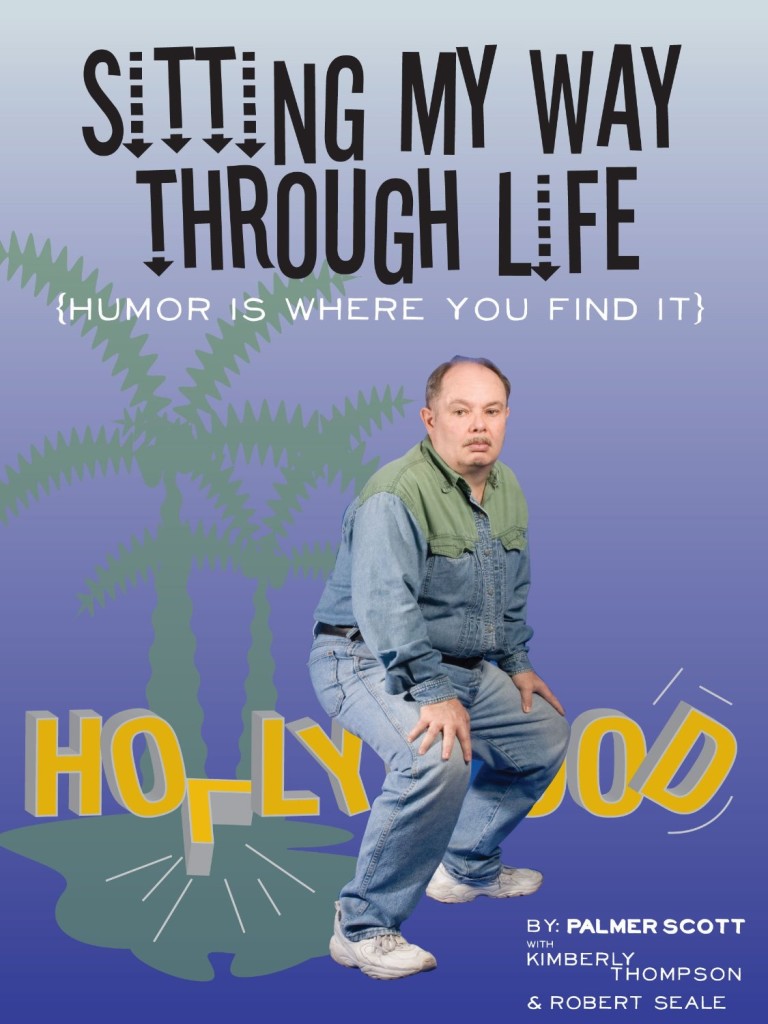 Memoirs are normally published by “has-beens”. This is a memoir by a “never-was” – one of the hundred thousand (mostly jobless) actors prowling for casting calls in the greater Los Angeles area.
Scott Palmer’s closest brush with fame was his appearance in the surrealist Adult Swim series Tim and Eric: Awesome Show, Great Job!, where he performed a skit about sitting on people. In this book, he talks about T&E as well as his adventures in things like car ownership, playing on Win Ben Stein’s Money, and generally being a not-even-on-the-alphabet-lister in Hollywood.
The book’s quite short, but it’s interesting, if only because Palmer has no interest in the usual structure of the book and fills it with all sorts of bizarre asides that probably wouldn’t have survived the red pen of an editor (to the book’s credit). He’s very candid and refreshing.
As Tim Heidecker said in a reddit AMA, they cast the show using traditional channels – but rather than the top of the pack, they use the bottom, as suits the show’s off-kilter aesthetic. As a result, they’ve collected an entourage of some truly bizarre actors – such as David Liebe Hart and James Quall, who are obviously a few sixpacks short of a beer. Exploitation? Maybe. These guys are all SAG members, getting paid the standard scale, aware that the show is a comedy, etc. To what extent they’re “in” on the T&E joke is debatable, but it’s not like they’ve been dragged from a psyche ward and shoved in front of a camera.
Is Palmer another guy like Quall and Liebe Hart? It’s hard to tell. There’s some signs that he doesn’t get what T&E is about (he complains that in the “I sit on you” sketch they used a take where he sings slightly flat), but again, he seems basically aware of what he’s doing. The way he tells it is that he’s pretty much a minder for Quall and Liebe Hart – helping them find their way around, keeping them out of trouble, etc.
Unfortunately, there’s often a lot of trouble, and Palmer falls prey to it as much as anybody. After multiple donation drives online, he’s had to retire from acting. A 9 to 5 career is not sympatico with last-minute casting calls. This is regrettable, but inevitable. Silliness is always transient and short-lasting, otherwise it’s insanity or manipulative calculation masquerading as silliness. Best of luck to Palmer in whatever he does after this, I guess.
It’s always interesting to see how people react when their main claim to fame is something odd or embarrassing. Peter Mayhew played Chewbacca. Doesn’t matter what else he did, doesn’t matter what else he wants to do. They might as well carve “Chewbacca” on his tombstone already. Scott Palmer doesn’t run from it. T&E is likely to remain the apex of his existence on earth. Rather than run from it, he’s chosen to own it. Respectable. Plus, he’ll sit on you.
 The album sounds incredible. It has a cool, glassy, smooth aesthetic, like expensive vodka. The reality that it’s just The Beatles’ “Ob-La-Di, Ob-La-Da” repeated thirty six times takes a while to sink in.
The songs mostly suck – puffy, wearisome tracks that make you think one minute in “very good, boys. I’ve gotten the point”…and they continue for another four minutes. Then the next song starts, and it’s exactly the same thing. The whole enterprise drips with pretension. “Mensforth Hill” is literally just another song played backwards, and I think if you listen closely you can hear evil Satanic messages (“we used to play punk rock…“).
What’s the point of this? Was the goal to write so much bad reggae that there would be no more bad reggae left to write? And why is it so long? In order to win a dick measuring contest with Bruce Springsteen, they fluffed Sandinista! out into a monstrous triple album that runs longer than every previous Clash LP combined. It would have been better at just forty minutes, but then I probably would have forgotten about it completely by now.