
Before this movie, you’ll look at bodybuilding as a freak show. After this movie, you’ll look at bodybuilding as a freak show. But for an hour or so, you’ll be sufficiently entranced by Arnold Schwarzenegger’s willpower and George Butler’s filmmaking to take the whole thing seriously.
Pumping Iron captures the 1975 Mr Olympia contest, particularly the intense training leading up to the contest. Arnold is preparing to defend is title for the last time, and nipping at his heels are contemporaries Franco Columbu and Lou Ferrigno. The film isn’t a documentary. The training and contest footage is real, but the “drama” scenes (oh no, Arnold’s going to sabotage Franco!) are scripted. Some were actually shot after the contest had ended.
Watching these guys is fascinating. Arnold is charmingly boorish, while Lou Ferrigno is moody and angsty – a born underdog. A lot of the movie’s conflict centers around Lou and his overbearing father, who pushes him around with impunity. Straight away you realize that Lou can’t ever win. Even if he takes home the title, it’ll be his dad’s victory, not his own.
There are lots of fun moments. Arnold’s tireless ability to involve scantily-clad girls in his workout routine, his sledging of Lou Ferrigno before the contest (“I called my mama and told her I won Mr Olympia 1975!”), and his hilarious monologue about the similarities between lifting weights and having an orgasm. There’s some serious stuff as well, like Ferrigno’s clashes with his father and Mike Katz’s I-want-to-reach-for-the-shotgun speech after he loses the Mr Universe contest.
One might feel cheated by the obviously punched-up Hollywood drama. But to be honest, I don’t think the movie was any more fake than the contest it depicts. Arnold was the figurehead of the Weider bodybuilding empire, which (via Ben Weider) controlled virtually every aspect of the Mr Olympia. He was definitely going to win the contest, regardless of how the competition looked.
Want a freebie? Serge Nubret, 12 days before the 1975 Olympia, showed up in tremendous shape. But he got barred from entering, ostensibly because he dishonoured the sport by appearing in a porn movie (I’ll refrain from making a comment). So he let his training regimen fall apart, lost 12 pounds of muscle in 12 days, and suddenly…he was allowed back in. Nobody cared about his porn movie appearance, because now he wasn’t a threat to Arnold anymore. This seemed like a really damning story when Mr Nubret related it on a bodybuilding forum, complete with pictures of how he looked 12 days before the contest.
The Weider brothers had much to gain by keeping Arnold at the top. He was charismatic and handsome, he wasn’t a black man, and he knew how to play the game: he wasn’t someone who would upset the apple-cart by demanding better wages or working conditions. He crushed Sergio in 1972 and Mentzer in his 1980 comeback, and many critics agree that these too were paper championships.
Arnold is the greatest bodybuilder in history. But it’s not because of his 7 Mr Olympia titles. Regardless of the lingering sensation that the contest might be the truly fake part of this movie, Pumping Iron is a very entertaining watch.
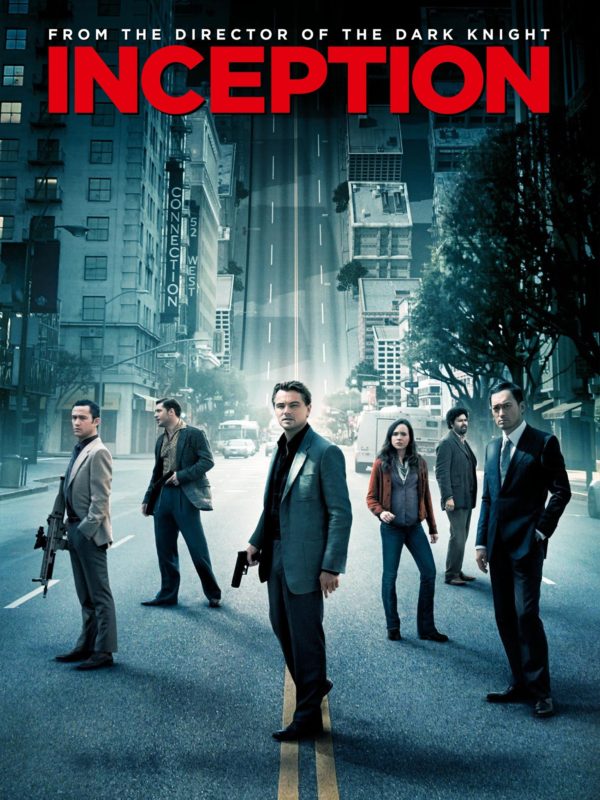
You and a friend might have different opinions. You and 24 Hours Later You might also have different opinions.
That happened with Inception, which I loved in the theaters but loved less when I left the theaters and have continued to like less until the current date. Now, I wouldn’t say I like it at all.
In the moment, it felt like second coming of the Matrix. Great action scenes, a strong and unified visual theme, a catchy “everything you know is a lie” riff, and so on. The movie casts a potent spell, but once the spectacle is gone, problems appear.
The plot’s basically nothing. Just a guy trying to con his way to a better life, using a “heist” that’s ridiculously roundabout, convoluted, and likely to fail. They get together on a plane and knock out a businessman’s son and hook him up to a dream machine and enter the dream and fake a hijacking inside the dream and put him into a dream inside the dream and plant a seed of doubt inside his mind and then they [insert complications] just to damage his business prospects? Is there no better way? Can’t they arrange a scandal where he’s caught with a hooker or something?
There are scenes where this movie just cheats on its own rules. Limbo is an inescapable hell, which two characters later escape at a moment’s notice. The characters live in a dreamworld where anything is possible and reality can be manipulated like play-doh, but they never take advantage of this. Okay, Arthur kills a dude with a logical paradox, and they may have magicked up some guns at one point, but that’s it.
But plot holes aside, the movie is just a legalistic series of if/then clauses that could be solved by a computer algorithm. All the effort on the part of the viewer comes from figuring out the premise. Once you understand the premise, the movie solves itself, becoming logical in one of the rare times when that’s not a good thing.
Dreams are irrational, aren’t they? Wouldn’t a dream within a dream would be even more irrational? And yet no matter how far down they travel, the same ironclad rules still apply, the same challenges still face them. You get the feeling they could travel down through a hundred levels of the dream and STILL be fighting the same generic guys with generic 21st century firearms in a generic city environment. Seeing them warp the environment and do incredible things in the beginning, and then the rest of the movie is lame James Bond shit…that was REALLY underwhelming. It feels like a meal where the dessert is served first.
Also, here’s your terrible review tagline. “So disappointing, you’ll wish your mother had used incontraception!!!”

As a young Redwall fan, I was hyped (as was said) when I heard this was coming out. It was clear that Redwall had run its course – perhaps the kindest thing to do would be for Brian Jacques to put a bullet through the skull of his decrepit and aging series and start out of with something fresh.
The first part was good, and seems to deliver the promise of Jacques reinvigorated. It trowels on the melodrama a bit thick, but it’s fast-paced and doesn’t have 30-page descriptions of food, so score one for the good guys.
It’s a 17th-century yarn about a boy and his dog who stow away on a ship – the ship that becomes the legendary Flying Dutchman, cursed to sail the seas eternally after its captain curses God. Ned and his dog escape, however, and use their gift of immortality for prosocial ends, setting out to do good deeds.
You should probably put the book down now, because all the good stuff is used up in the prologue. Brian Jacques immediately turns his premise into an excretable Hardy Boys adventure mystery. Basically, Ned and his dog end up in a turn of the century English village that is about to be demolished by some stereotypical rich candy-ass, and with the aid of some plucky village youngsters they must discover the secret behind…something. This was the part where I basically stopped caring. The transition from an awesome high-seas adventure to a cosy little Fantastic Five mystery jaunt was so underwhelming and disappointing that it caused me to not care.
All of Brian Jacques familiar Redwallisms emerge here too. There’s stupid villains (here, schoolyard bullies) who are somehow the terror of the village despite the fact that they can’t find their ass with both hands, the brave and principled heroes who do nothing wrong and are consequently as interesting to read about as the items on Brian Jacques’ grocery list, there’s the inevitable scene where the main character faces the villain, looks him in the eyes, and the villain is forced to look away because the intensity of his stare, the long and pointless descriptions of food…do I have to go on? This crap is in a score of Redwall books.
It’s not that the story is bad so much as that he set us up to expect so much more. Why couldn’t the entire damn book be like the first part? The Redwall books were always like this. A few amazing scenes, and the rest of the book might as well have been written by a different person.