Human cells die, and new cells regenerate in their place. After seven years, you are a completely new man. Clive Barker is Exhibit A of the hypothesis. The man who wrote great short stories like “Dread” has clearly been processed into skin flakes and loose hair and motes of dust, and in his place is…this man. Mister B Gone is rat shit. If Clive Barker can do no better than this, then I hope he never writes another book.
It’s a written as the account of a demon who has escaped from hell via a fishing net (one of the perks of being a “fantasist” or whatever is being able to develop the plot via random spurts of Dadaist nonsense) and his adventures wandering the earth. Eventually he encounters Johannes Gutenberg, inventor of the printing press, which is the subject of a war between the forces of heaven and hell. One of Clive Barker’s recurrent ideas is that God and the Devil are not the embodiments of good and evil, but more along the lines of political rivals waging turf wars over corporeal fiefdoms.
The book doesn’t have a fourth wall. Jakobok the demon addresses the reader directly and urges him to burn the book, lest he damn his soul. The first time this happened I smiled. The second time made the corners of my mouth upturn by a zeptometer. The third time make me feel the inklings of fear. “He’s not going to do this through the whole book, is he?” By the tenth time I successfully trained my eyes to skip any paragraph containing the phrase “burn this book,” and I thereby greatly shortened my reading time.
What’s the point of such an annoying and persistent plot device? What’s the goal here, Barker? Is it to irritate the reader? I felt like I was reading a novelised version of that Paul Provenza/Penn Jillette Aristocrats movie, with a hundred comedians all telling the same joke, one after the other, and all of them acting like it’s fresh and new.
The story is worthless and uninteresting. Lots of events happen, but Clive Barker never brings any interest to any of them. It’s about demons and angels but I feel like I’m reading about sitcom characters. There are scenes in Hell that make it seem like Dogpatch with extra fire. Maybe that’s Mister B Gone’s biggest crime. It makes the supernatural seem dull and boring.
Clive Barker’s characterisation, never good, here reaches a new low. If you packed every character in Mister B Gone into an apple cart and pushed it off a cliff, I would be worried about the welfare of the apple cart.
Incredibly, this is Clive Barker’s first novel since 2001, discounting the Abarat books (which don’t sound interesting enough for me to want to read). Perhaps that’s the explanation. Maybe he’s more into screenplays and games and action figures these days. But shouldn’t a genius produce great work even when he half-asses things? They say Stephen King wrote The Running man in a single week…
In the meanwhile, someone please harvest the dust from Clive Barker’s house circa the Reagan presidency and put it to good use!
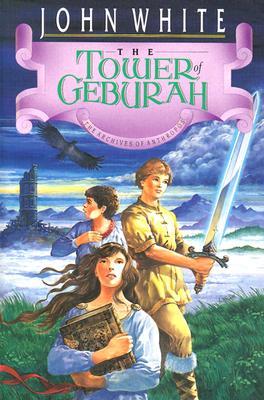 Some say Archives of Anthropos books are clones of the Narnia books. This is completely wrong. Author John White puts his own unique touch on the Narnia franchise: he makes it gayer and more boring.
To explain, CS Lewis’s landmark series led to a boom industry of Christian books that involved children being whisked away to magical worlds. A Wrinkle in Time by Madeleine L Engle is a good example. It is a good book that compares well with Lewis’s work. The Tower of Geburah is the runt of the litter. On its own, it can perhaps mount a justification for its existence. But it led to a series of six Narnia ripoffs, which is really a bit much.
The story…? Mostly Narnia. I think he changed some names around. There’s a character called Mary who is exactly like Edmund. Actually I think she was from the second book. It’s been a while. The magical realm is called Anthropos, and it’s ruled by a king called Kardia. For Greek students, this means you are going on a magical journey to the nation “Man,” ruled by the goodly king “Heart.” Every time John White needs a name he just jacks it from some foreign language.
Many adults enjoy A Wrinkle in Time, but the only people who enjoy The Tower of Geburah are people who read it as kids. I’m not one to take away from anyone’s formative memories…but damn it, you were a child. You spent your days jamming crayons and glue into your mouth. We don’t let children drive, we don’t let children drink, and we don’t let children vote. Why do you think your child opinions on literature are worth a shit?
My advice is to re-read The Tower of Geburah with the greatest of caution. You first experienced it through the warped perspective of childhood. You might think adulthood would give you a greater appreciation of this animal, but in this case you’re just more likely to notice the faux fur.
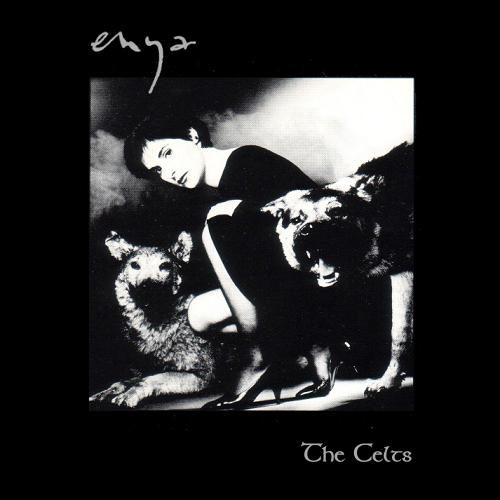 Enya’s first album is different from the others, as her signature sound had not yet been hammered out. But it’s better than the others…maybe because her signature sound had not yet been hammered out.
Where later Enya releases just kind of bulldoze you under a massive wall of pad synths and layered vocal tracks (they’re still good), The Celts sounds sparse and intriguing. It has more active instrumentation than any of her other releases. The melodies are more discernable. The textures are stronger and richer, and it seems to draw on a wider set of influences. You hear some things Enya seems afraid to touch these days: such as lead synths and electric guitar.
“The Celts” and “Aldebaran” are both very nice, and then “I Want Tomorrow” arrives…yeah, this song is just insane. Most Enya songs tend to ride a single big idea around like a pony, whether it’s a chorus hook or a melody or whatever. “I Want Tomorrow” does have some climactic parts but it mostly comes across as a free-flowing experience that isn’t written around any particular moment in the track. It’s hard to explain, but the song sounds like a couple of different songs joined together, all of them articulating different moods, but all of them making sense with each other.
About two thirds of the The Celts has no lyrics. I’d call these songs instrumental, except Enya’s “instrument” of choice has always been her layered backing vocals, of which there are a plenitude.
A few highlights emerge from these wordless songs. “Epona” is compact and efficient, and reminds of Vangelis classics such as “Movement V.” The three sections of “Triad” take the listener through a series of differing moods and atmospheres. “The Sun in the Stream” is the second amazing classic from the album. It’s brilliantly realised from start to finish…just a perfect song.
This is the Enya CD I always come back to. Watermark and Shepherd Moon aren’t too far behind musically, but on The Celts Enya found something very rare and special…and then lost it again. I don’t expect her to ever produce a work of this quality again.