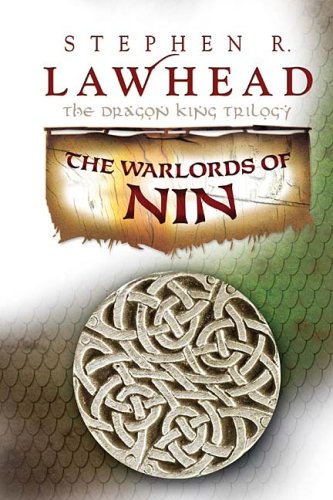
 My first Stephen Lawhead books were his first too. I really liked the three Dragon King books when I read when at age 10. I don’t think I would have liked them so much now. They’re made to fill the niche of “my first fantasy series” and if you have already read 500 fantasy books you need this series like a 21st century logger needs a flint axehead.
The first book tells the tale of a young man called Quentin who must save a king (and a kingdom) from an evil sorcerer called Nimrood. The other volumes find more adve(ntures/rsaries) for him to overcome and more lessons for him learn. He is assisted by supporting characters such as the knight Ronsard and the Atreyu-like Toli. I don’t recall there being any actual dragons, but there are surely enough luscious maidens to support one or two.
The books go heavy on the Christian allegorising, more than any later Stephen Lawhead novel. Quentin is meant to stand in for any Christian struggling in his faith, and it soon becomes clear that the nation of Askelon must undergo a spiritual salvation as well as a carnal one. It’s a more subtle than The Chronicles of Narnia or The Archives of Anthropos. You won’t read any one thing and think “that represents the original sin” or anything like that.
The first two books are better than the third. They feature scary bad guys and a real sense of menace. Book three resolves a few loose ends but it never really seemed particularly necessary to me. Quentin puts some seditions lords in their place, slays a resurrected (and utterly pathetic) Nimrood, and learns an Important Lesson(tm) about pride…great. Books one and two are a stag party with good friends. Book three is those same friends quibbling over the bill.
The books’ strength is their fast pace. The basic story is utterly familiar, but it moves. It goes from point to point quickly and efficiently. This is no 900 page Robert Jordan fantasy travelogue. Worldbuilding is minimal, and the characters are sketched out to the barest outline necessary to support their role in the story.
If you like imaginative fantasy you will have lots of fun with these books…using them to prop up a broken table so you can read The Song of Albion. Good for what they are, though.
 You’re at a swimming pool. You kick off from the wall. You feel like a rocket riding its booster stages. You’re moving so fast that you think the momentum will carry you to the other side. But it’s not to be. The water is slowing you down…slowing you down…stopping you. Now you have to start swimming. Goodbye fun, hello breastroke.
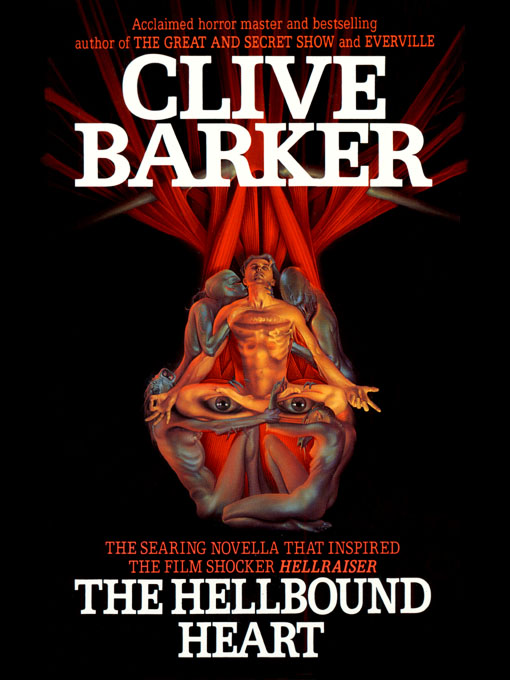
…That’s what Clive Barker feels like. The Hellbound Heart has a fascinating beginning, but then the plot collapses like a souffle and you’re left with a very unremarkable horror novel, filled with slashings and stabbings, and you read on mostly because the story was very good before and hopefully will become very good again. The Hellbound Heart doesn’t overstay its welcome, but that’s because it’s short.
The opening chapter introduces us to a hedonist whose quest for pleasure has caused him to inadvertently pick the lock to hell itself. He meets Cenobites, paladins of pain, who spirit him away to a land of never-ending agony. But he leaves part of himself behind, and thus has a small chance of being able to escape hell.
End chapter one. Things never get this interesting again. The story rapidly loses voltage.
New characters arrive. The fantastically compelling plot gets yanked back down to earth as we’re immersed in unrequited love affairs and ennui and boredom and other things that aren’t very exciting to read about. Soon the story gets a bit cartoonish and ridiculous. All of Clive Barker’s usual shortcomings gatecrash the party. The characters are as unpleasant as the ones from his Books of Blood short stories, but now we have to tolerate them for novella length. Out of the four human characters, two are reprehensible, one is pathetic, and Kirsty is a milksop. This last one is a problem. I don’t care about her. A guy is trying to murder her, and I don’t give a shit. She’s a department store mannequin. Barker hasn’t done anything to make her interesting except for some generic female angst that was done ten times better in Stephen King’s first novel.
Clive Barker completely fails to exploit his strengths: world-building and epic metaphysical fantasy. A journey to another reality where pain is pleasure? That’s the kind of thing I want to read. An undead zombie running around with a knife? I get bored of that sort of thing very quickly. Sometimes I get bored of it before I even start reading it.
The Cenobites are amazing, though. Definitely one of Clive Barker’s best creations. Obviously they feature predominately in the opening chapter, although in the last few pages they return for the most half-assed comeback since the new Skid Row album.
 The 80s became the 90s, and the unstoppable steel battle beast called Motley Crue started going into engine failure. A new style of music was “in”, and it was antithetical to Crue’s. The days of rocking out and living large were over. The days of whining about mom and dad had begun. Then, in 1992, the band lost its singer (Vince says he was fired…the rest of the band says he walked out), and Motley Crue replaced him with an unknown vocalist from Pennsylvania.
John Corabi is one of the saddest chapters of the Crue story (excepting the people who actually died, I guess). He was a square peg in a Vince Neil shaped hole from the beginning. The band held on to the news that Vince had quit for as long as possible (it seems Elektra was advancing them $25 million on this album and they thought the deal would fall through if they announced a lineup change). John entered the band amid an atmosphere of secrecy and psy-ops.
His voice was a grave baritone, totally unlike Vince’s. He didn’t command that aura of rockstar excess that Vince wears like a cloak. His stage presence seemed limited to running around and yelling a lot. In all, he was never “the Motley Crue singer”, the idea is a sick joke. He accomplished little more than filling a space in front of the microphone while Vince was gone. And soon Vince would want that space back.
Motley Crue updated their sound a little here. It’s the usual “hair metal band goes grunge” shift, downtuned guitars, grittier singing, more raw and personal lyrics. That’s not surprising, at the time everyone and their brother was “reinventing” themselves to sound like they came from Seattle. What is surprising is that Crue mostly gets it right, and their 1994 self-titled sounds very good in most respects.
I skip the first two songs. “Power to the Music” is a Rage Against the Machine clone, except where RATM swaggers and stomps, this plods. What a boring song. “Uncle Jack” is the same story, kiddy-fiddling lyrics notwithstanding. The music is so dull it almost almost seems to flop out of your speakers.
By “Hooligan’s Holiday” the band has started to wake up. The song’s not a total classic like “Wild Side” but it sports lot of cool grooves and interesting riffs. “Misunderstood” is the best ballad ever written by this band, with John Corabi putting together some really heartfelt lyrics.
Then there’s a few not so amazing songs, although if you liked the fillers from Dr Feelgood you’ll like “Poison Apples” as it sounds a bit like “SOS” and company. I always go right to “Smoke the Sky” which is heavy enough to rival Pantera and Pro-Pain but has the attitude and catchiness of White Zombie. If the rest of the songs had sounded like “Smoke the Sky” we’d be talking about a legendary metal classic instead of just a good grunge rock album.
Nevermind all the changes and updates, if we’re talking quality then this is Motley Crue doing business as usual: 2-3 songs that sound amazing and then a number of others that do little more than manage to exist. The Crue can’t escape their nature: they’re a band remembered for their big hits rather than their consistent albums. Apples never fall far from the tree. Not even poison ones.