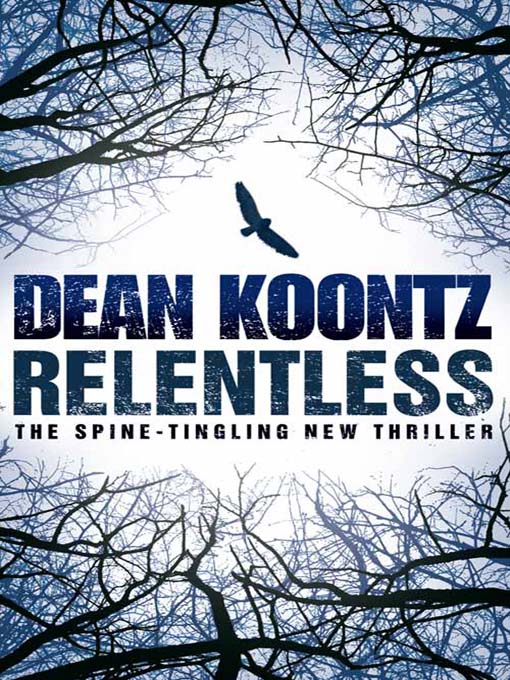
 The book opens with an adorable anecdote about a boy going to a pet shop to adopt a dog. Oh, look. Dean Koontz is back in cute mode.
The first section of the book is truly horrific, detailing the quirky and hilarious life of a quirky and hilarious family who I want to murder with a chainsaw. We have a Dean Koontz Trifecta of Cute (a lovable dog, a lovable kid, and a protagonist who’s an author), huge amounts of preaching and moralising, and a general air of forced whimsy that makes getting crapped on by an elephant seem like a joy.
One scene actually made me angry. One of the protagonists says “I don’t give a flying…” realises that the aforementioned child is listening, finishes with “…furnal,” and goes off and running into this funny made-up biology lesson on the Flying Furnal species of squirrel, at which point we’re all meant to be rolling around laughing at Koontz’s livewire wit.
Well, you know what I think? Dean Koontz’s career needs to end. Once he was a storyteller. Now, he’s a self-parody. Why do you do this, Dean? This isn’t entertaining, this is awful. You’re like an annoying older relative doing “baby talk.” That’s the verdict on Relentless…300 pages of “COOCHIE COOCHIE COO.” The last few Odd Thomas books sucked, and now we get this. Dean Koontz is offically over. Close the coffin lid. Pound down the nails.
The story is about a author who writes tales of empathy and humanity, and attracts the rage of a murderous postmodern literary critic who believes such things are outdated (if you listen closely you can hear a sledgehammer sound of Koontz inserting one of his subtle metaphors). The critic has the resources of a Bond villain, and soon the author and his family are running for their lives.
That Koontz handles the story well on a certain level isn’t surprising. His led this horse around the bend many times before. It doesn’t matter, because Koontz’s nonstop clowning mixed with moralising deep-six the book.
He just has no restraint at all. There’s an embarassing scene at the end where the heroes have the main bad guy cornered and he/she/it recites a list of philosophers, roll call style, whom Dean Koontz doesn’t like. There’s no subtlety, and no attempt made to integrate it into story in a believable way. It’s just Koontz sharing his views directly at the reader through a megaphone. There are scenes of gore and violence that might have fitted in on an older Koontz title. Given the cutesy and saccharine atmosphere of Relentless, they stick out like a hand with five sore thumbs.
The book has a comic relief character called Hud Jacklight. He’s a literary agent who phones the author now and then to suggest hilariously tasteless book ideas. The Great Gatsby II, with Gatsby reborn as a vampire. White Fang II, with wolves possessed by alien mind control rays. If those books were written, they would embrace Relentless by Dean Koontz with papery arms and call it a brother. Dean Koontz is an expert on shitty books. They’re all he knows how to write these days.
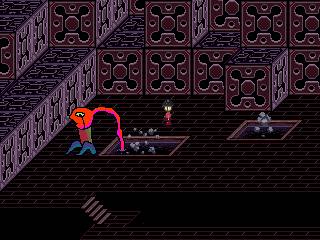 Yume Nikki is so strange…and so familiar! It is everything games used to be but no longer are.
When I say it’s like a classic adventure game, I don’t mean it’s like Escape from Monkey Island. It’s more like the odd and dissolute wave of adventure games that came out during the CD-rom revolution. In the early to mid 90s, publishers were hungry for CD-based games and released (in addition to a deluge of crappy knockoffs) quite a few experimental and anticommercial titles like Bad Mojo and I Have No Mouth and I Must Scream that normally would never have made it to store shelves.
Yume Nikki (made in RPGMaker 2003 by Kikiyama), is basic and minimal. You play as a reclusive girl who has dreams and then writes the dreams down in a diary. You have a small house to explore, and a bed to dream in. You access dreams via a central nexus point with twelve doors. Each of the doors takes you to a world so strange and so huge that you might never find your way back.
There’s no dialogue, and no obvious story. The game is free-flowing and open, and mostly consists of exploring strange and confusing lands beyond the veil of sleep. You can wake yourself up at any time by pinching your face. In the dream worlds there are items that can be collected, although many of them seem useless. The NPCs aren’t much help, either. Ultimately, you’re on your own, and you have to discover what purpose Yume Nikki has…or if it even has one.
You can see what creative well Kikiyama was drawing from here. The rudimentary graphics, soothing music, and “do whatever you want” gameplay synthesises into a game with a powerful and spellbinding atmosphere. Any deficiencies in content are remedied by your own brain. Needless to say, you can find numerous fan theories online “explaining” every little thing from the theories of Freud and Jung.
The game’s ending (if you’re able to find it) is surprising. I’ve only played one game that ends the way Yume Nikki does (Creative Reality’s 1994 game DreamWeb), although Yume Nikki colours the darkness with a bit of mystery. There is a small detail about the environment, easy to miss, that will cause you to rethink the ending and its implications.
But even the fact that it has an ending seems unimportant. It might have just kept on going forever. This isn’t a game you play, complete, and check off your Gamer’s Literary Card. It’s more of an interactive digital experience that has value only equal to the effort you put into it. Either way, it should be played. Yume Nikki a unique and eerie time capsule into gaming’s darkening past.
P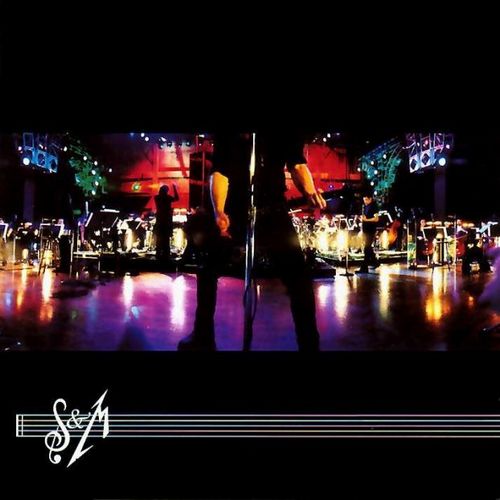 ut a piece of paper on a table, draw a circle on it, and label the circle “Metal Bands that sound good with an orchestra.” Inside the circle write Manowar, Deep Purple, and others.
Metallica would go outside the circle, on a different piece of paper, and on a different table.
Metallica songs categorically do not sound good with an orchestra. Either they’re thrash metal (pre 1991), a raw and minimalistic cousin of hardcore punk that is not noticeably improved by horn sections, or modern rock (post 1991) that, with a few exceptions, shouldn’t be performed live at all in any format.
You can hear the problems when the band farts their way through “Master of Puppets”. The orchestra and Metallica sound disconnected, like two jigsaw pieces with edges that don’t fit. Part of it is James’ dull Nickelback-sounding rhythm tone, but mostly it’s the song. “Master” has quite busy riffs, and the added symphonic swirls and vamps send it over the top. The famous clean section in the middle sounds like a garbled out of tune mess. There’s too much stuff here, all of it fighting for space.
Metallica has a decent stable of long progressive-sounding songs, and tracks like “The Thing That Should Not Be” and “Call of Ktulu” fare a little better. They also play a bunch of Load and Re-Load songs. They sound pretty bad, which is no surprise. Most of these songs were rubbish in their original incarnations. There are two new songs, cut from the Load template, with “Minus Human” being the more interesting of the two. The symphonic elements still clash. One Load song sounds better recorded like this, though. On disc, “Hero of the Day” was the worst Metallica song recorded up to that point. Here, it just sounds ridiculous and a bit funny.
The performance…underperforms. James’ voice is overly clean sounding, and he can’t bark or shout worth shit. Lars Ulrich is a perennial weak link in the band, although at this point he wasn’t yet setting records for the worst drum sounds ever recorded. Kirk continues laying down his trademark pentatonic shredding, but I wish he would leave the wah pedal alone. These symphonic songs would sound better with a less “expressive” approach to lead playing. If Metallica had recorded S&M in 1986 the effect would have been one of over-the-top excessiveness. But now, they sound tired. Not the kind of tiredness you fix with a nap. The kind of tiredness you fix with retirement. Why is this band still around? Almost everything they’ve recorded after 1991 is worthless.
S&M sounds like a Metallica cover band composed of balding 40 year old landscapers, playing a mixture of awesome classics and crappy modern hipster rock, with the venue accidentally double-booked with an orchestra for some reason.